
🩺 शादी से पहले मेडिकल टेस्ट जरूरी? भारत में कानून की पूरी बात
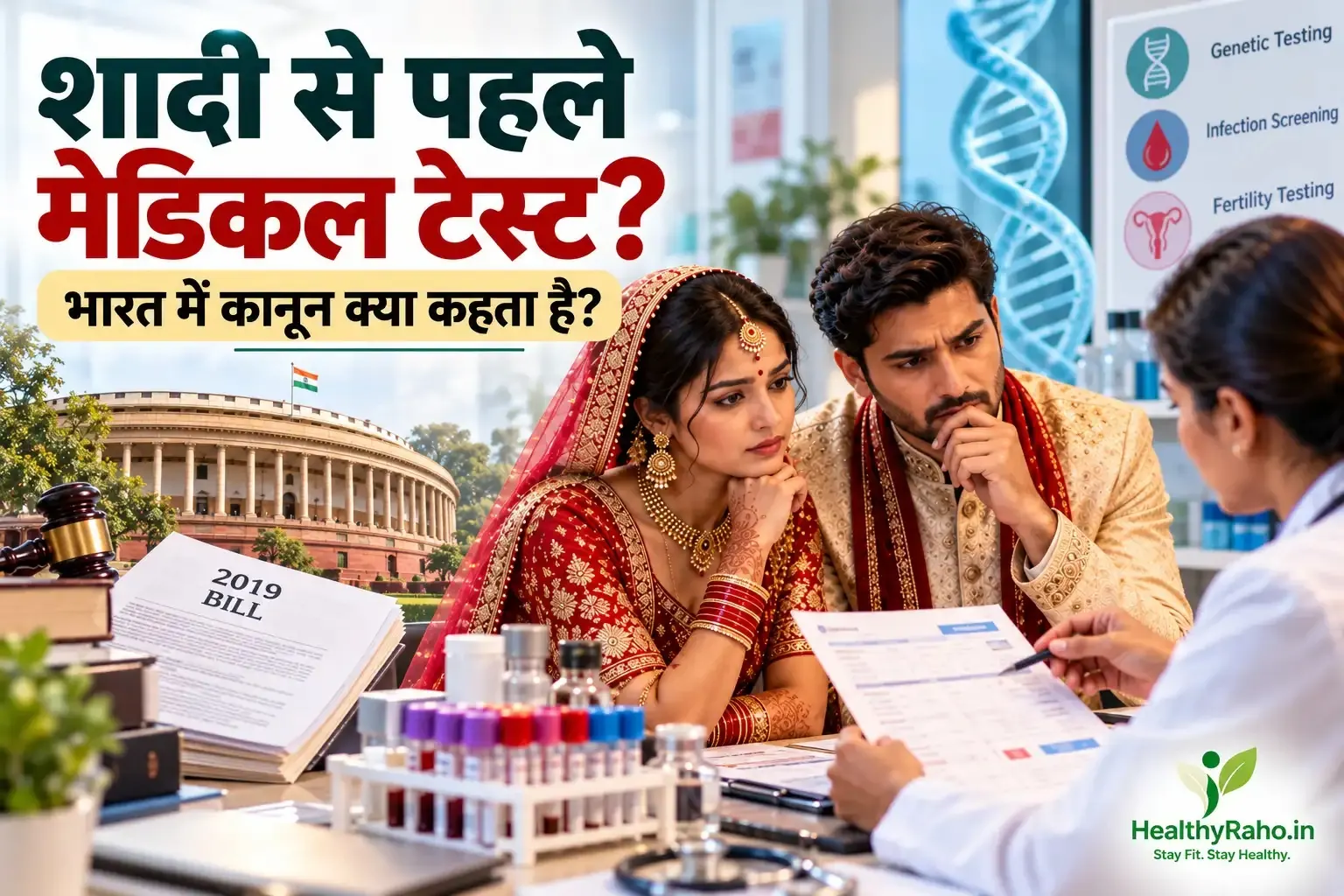

शादी की तैयारी शुरू होते ही बातचीत अक्सर कुंडली, परिवार, नौकरी, कमाई, घर और भविष्य की योजनाओं तक पहुंच जाती है। लेकिन एक जरूरी सवाल कई बार पीछे छूट जाता है। क्या शादी से पहले दोनों पार्टनर्स को अपनी महत्वपूर्ण स्वास्थ्य जानकारी भी एक-दूसरे से साझा करनी चाहिए?
यही सवाल Pre-Marriage Medical Screening यानी विवाह-पूर्व स्वास्थ्य जांच की बहस को जन्म देता है।
यह विषय केवल बीमारी पकड़ने या blood test कराने तक सीमित नहीं है। इसमें genetic diseases, future pregnancy, sexually transmitted infections, chronic diseases, mental health, privacy और सबसे बढ़कर किसी व्यक्ति की medical condition को उसकी शादी की eligibility से जोड़ने का खतरा शामिल है।
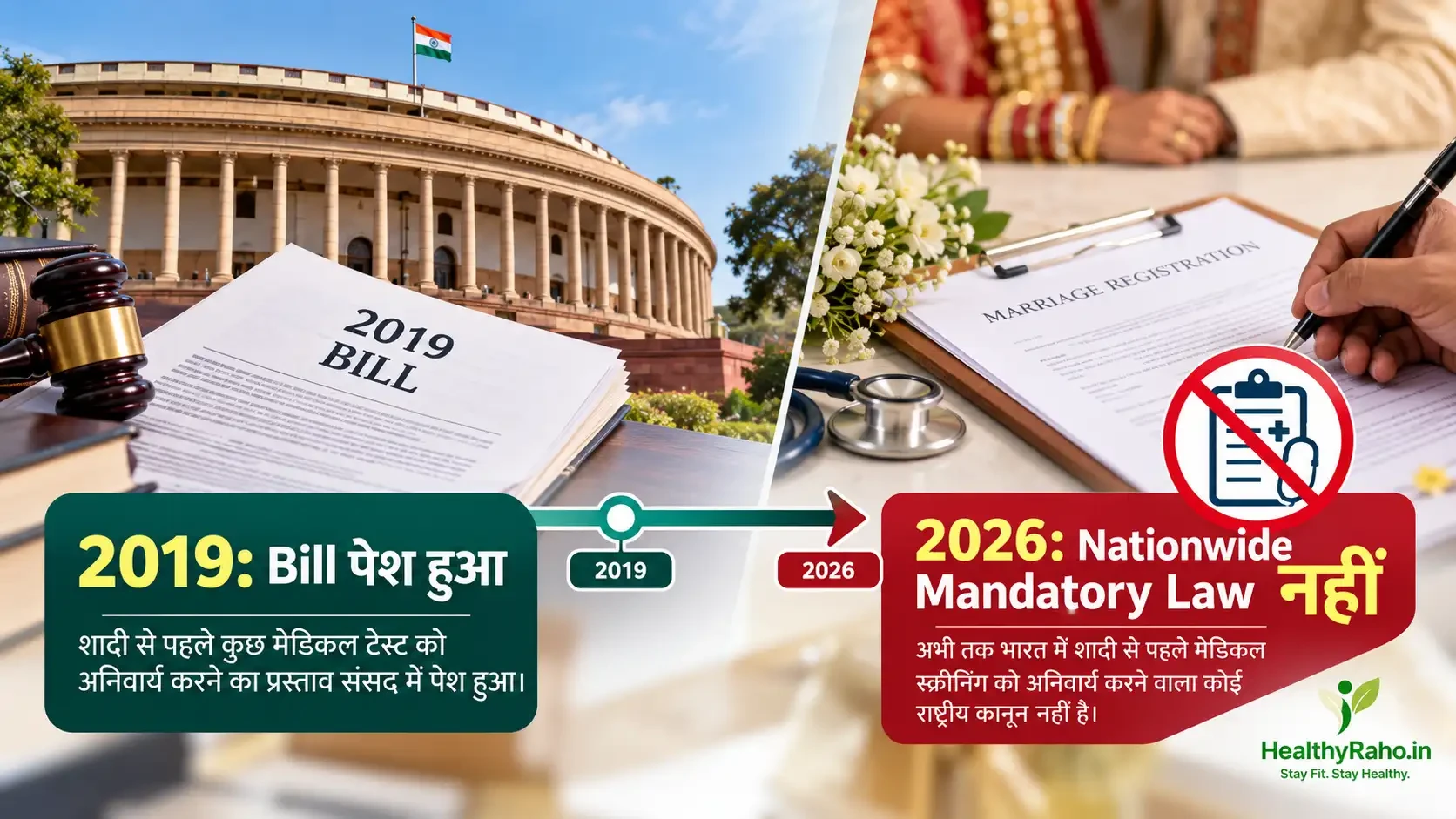
भारत में इस विषय पर चर्चा नई नहीं है। 26 जुलाई 2019 को लोकसभा में Free and Compulsory Pre-Marital Genetic Testing Bill, 2019 पेश किया गया था, जिसका उद्देश्य शादी या परिवार शुरू करने की योजना बना रहे couples में sickle-cell disease और thalassemia जैसे genetic blood disorders की पहचान के लिए free और compulsory genetic testing का प्रस्ताव रखना था। यह एक Bill था, लागू nationwide law नहीं।
इसलिए सबसे पहले एक जरूरी बात साफ कर लें:
सितंबर 2026 तक भारत में हर शादी के लिए nationwide comprehensive mandatory medical screening की कोई लागू केंद्रीय व्यवस्था नहीं है।
लेकिन अगर भविष्य में ऐसी व्यवस्था पर विचार होता है, तो सवाल सिर्फ यह नहीं होगा कि “कौन-सा test कराया जाए?” असली सवाल यह होगा कि इस health information का इस्तेमाल कैसे किया जाएगा?
📝 इस आर्टिकल में आप जानेंगे:
🇮🇳 भारत में शादी से पहले मेडिकल टेस्ट का वर्तमान legal status
🧬 2019 के proposed genetic testing Bill में क्या था
❤️ Thalassemia और sickle-cell screening क्यों महत्वपूर्ण है
🩺 क्या हर व्यक्ति को एक ही medical test package की जरूरत है?
🦠 HIV, Hepatitis और STI testing को कैसे समझें
👶 क्या शादी से पहले fertility test जरूरी है?
🧠 Mental health screening में सावधानी क्यों जरूरी है
⚠️ Mandatory screening से privacy और stigma के क्या risks हैं
🌍 Oman में 2026 से mandatory premarital examination का मॉडल
✅ शादी करने वाले couples अभी practical तौर पर क्या कर सकते हैं
❓ 12 जरूरी FAQs
🔎 भारत में क्या शादी से पहले Medical Test अभी Mandatory है?
इस सवाल का सीधा जवाब है नहीं।
सितंबर 2026 तक भारत में ऐसा कोई nationwide central framework लागू नहीं है जिसके तहत हर दूल्हा-दुल्हन को शादी से पहले HIV, thalassemia, fertility, diabetes, thyroid, mental health या किसी दूसरे व्यापक health panel की जांच कराकर marriage certificate लेना जरूरी हो।
हालांकि, इस विषय पर संसद में legislative initiative जरूर सामने आ चुका है।
26 जुलाई 2019 को लोकसभा में Free and Compulsory Pre-Marital Genetic Testing Bill, 2019 पेश किया गया था। Official Bill text के अनुसार इसका उद्देश्य शादी या परिवार शुरू करने की योजना बना रहे couples के लिए free और compulsory pre-marital genetic testing का framework बनाना था, खासकर sickle-cell anaemia और thalassemia जैसे genetic blood disorders की पहचान के लिए।
यह distinction बहुत महत्वपूर्ण है।
किसी Bill का संसद में पेश होना और उसका कानून बनकर लागू होना दो अलग बातें हैं। इसलिए “भारत में शादी से पहले मेडिकल टेस्ट का कानून लागू हो गया” जैसी headline misleading होगी।
इस विषय को सही तरीके से ऐसे समझना बेहतर है:
भारत में विवाह-पूर्व genetic/medical screening को लेकर legislative proposals और health-policy discussions हो चुके हैं, लेकिन हर शादी के लिए comprehensive mandatory medical screening की nationwide व्यवस्था लागू नहीं है।
🧬 2019 का Bill किस समस्या पर केंद्रित था?
2019 का प्रस्ताव कोई सामान्य “full body marriage check-up” नहीं था।
इसका मुख्य focus genetic blood disorders था, जैसे:
Thalassemia
Sickle-cell disorders
अन्य haemoglobin disorders
यहां एक medical distinction समझना जरूरी है। carrier होना और बीमारी होना एक ही बात नहीं है।
उदाहरण के लिए, sickle-cell trait वाला व्यक्ति sickle-cell disease से अलग स्थिति में होता है। National Sickle Cell Anaemia Elimination Mission भी स्पष्ट करता है कि carrier status और disease को अलग-अलग समझना जरूरी है और genetic counselling का उद्देश्य व्यक्ति या couple को risk की जानकारी देना है, न कि उनके लिए marriage या reproductive decision लेना।
अगर किसी autosomal recessive disorder के लिए दोनों biological parents carriers हैं, तो हर pregnancy में बच्चे के affected होने की संभावना 25%, carrier होने की संभावना 50% और उस particular condition के लिए unaffected होने की संभावना 25% हो सकती है।
लेकिन यह probability specific genetic condition और parental carrier status पर निर्भर करती है। इसलिए report देखकर खुद निष्कर्ष निकालने के बजाय genetic counselling जरूरी हो सकती है।
❤️ Thalassemia और Sickle Cell Screening इतनी महत्वपूर्ण क्यों है?
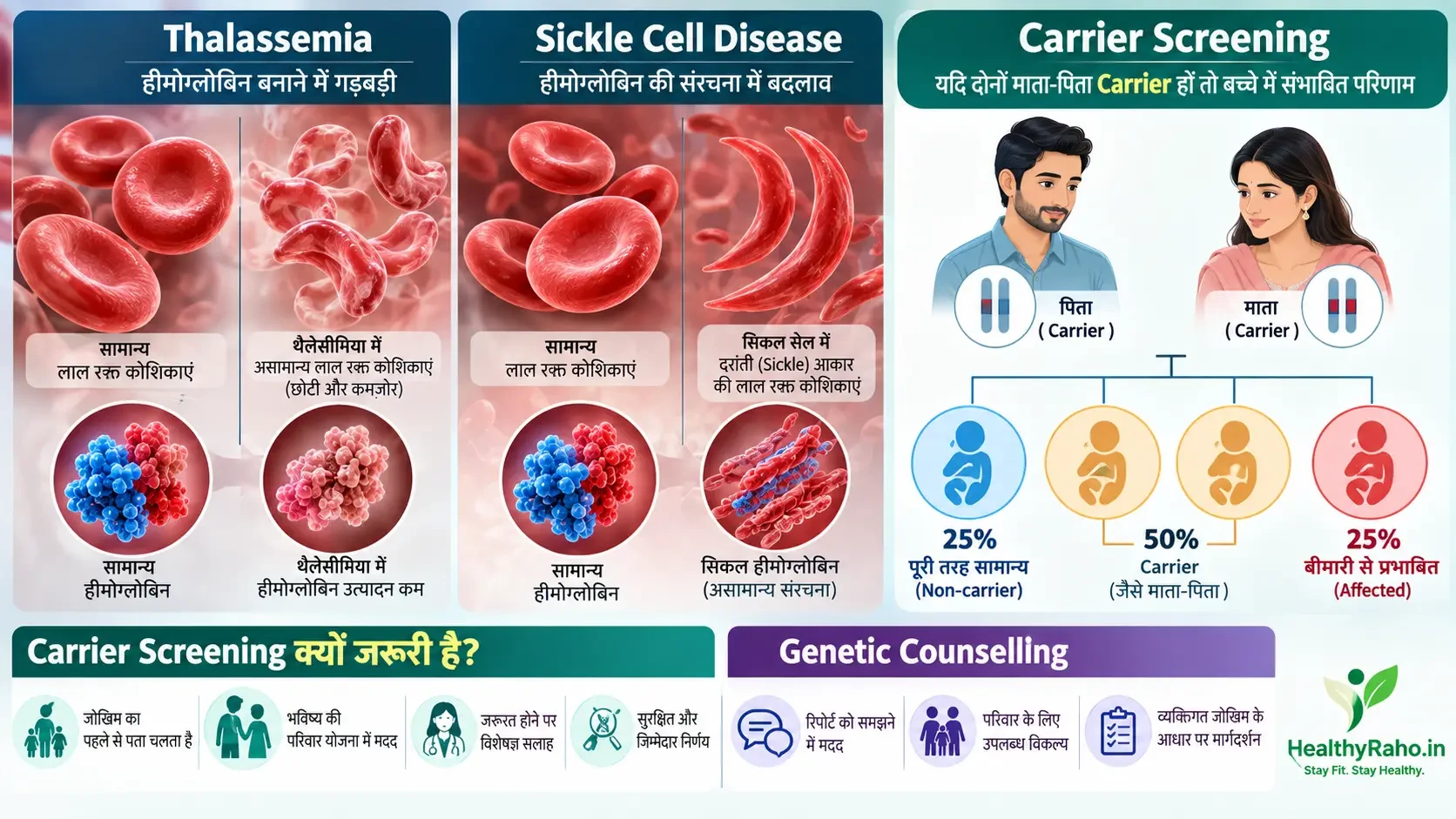
भारत में haemoglobin disorders public-health concern हैं और अलग-अलग क्षेत्रों तथा communities में carrier rates काफी अलग हो सकते हैं।
Indian research और clinical guidelines में thalassemia तथा sickle-cell disorders के लिए carrier screening, preconception counselling और pregnancy के दौरान screening की भूमिका पर चर्चा की गई है। Indian guidelines में premarital, preconception और antenatal screening को अलग-अलग contexts में इस्तेमाल करने की बात कही गई है।
सबसे महत्वपूर्ण बात यह है कि screening का उद्देश्य केवल यह बताना नहीं है कि “आप carrier हैं।”
असली फायदा तब मिलता है जब result के बाद व्यक्ति को यह समझाया जाए कि इसका मतलब क्या है, partner का testing कब relevant हो सकता है और pregnancy planning में कौन-कौन से medical options उपलब्ध हैं।
National Sickle Cell Anaemia Elimination Mission भी genetic counselling को informed decision-making से जोड़ता है और स्पष्ट करता है कि counselling non-directive होनी चाहिए-यानी counsellor जानकारी और risk समझाए, लेकिन शादी या बच्चे के बारे में फैसला couple पर छोड़े।
यही approach future screening policy में भी महत्वपूर्ण हो सकती है।
Carrier result को “marriage rejection certificate” बनाना medical screening का उद्देश्य नहीं होना चाहिए।
🧪 क्या शादी से पहले हर व्यक्ति को एक ही Medical Package चाहिए?
यहीं पर कई लोगों को भ्रम होता है।
Internet पर “complete marriage health package” जैसे नामों से कई तरह के packages देखने को मिल सकते हैं, लेकिन शादी के कारण हर healthy adult को दर्जनों tests एक साथ कराने की जरूरत नहीं होती।
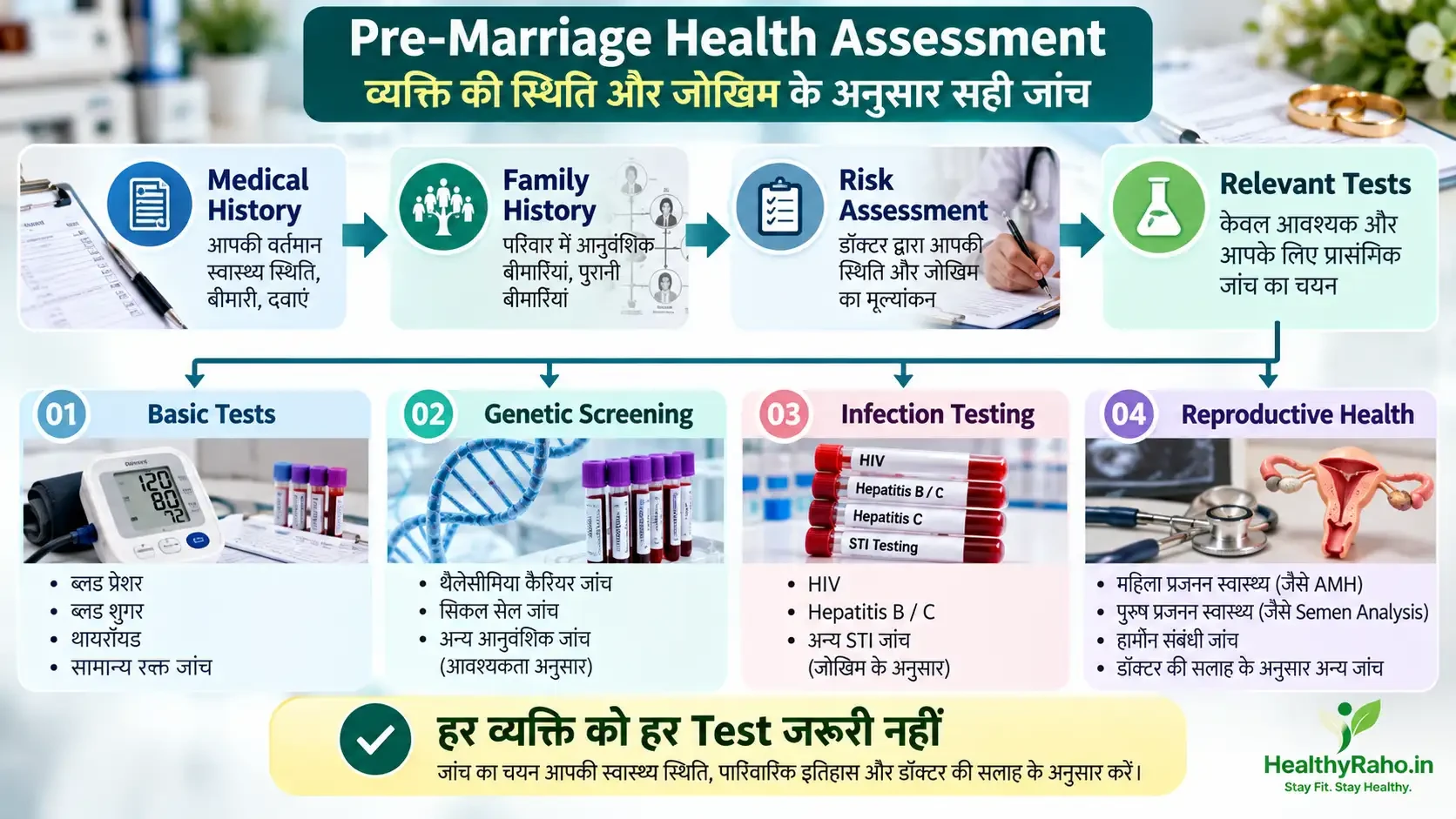
एक practical approach तीन स्तरों में समझी जा सकती है।
🟢 1. Basic health assessment
Doctor medical history और risk factors देखकर जरूरत के अनुसार blood pressure, weight, blood sugar, CBC या दूसरे tests की सलाह दे सकता है।
अगर किसी व्यक्ति को पहले से diabetes, hypertension, thyroid disease, epilepsy, kidney disease, asthma या कोई दूसरी chronic condition है, तो उसका medical history discussion ज्यादा महत्वपूर्ण हो सकता है।
🧬 2. Genetic और hereditary risk assessment
अगर परिवार में thalassemia, sickle-cell disease या कोई specific inherited disorder रहा है, तो doctor genetic counselling या relevant carrier testing की सलाह दे सकता है।
भारत में haemoglobinopathies के लिए preconception screening को विशेष महत्व दिया गया है। कुछ Indian guidelines couples को preconception stage या pregnancy की शुरुआत में screening की पेशकश करने की बात करती हैं।
🩺 3. Situation-specific tests
हर व्यक्ति के लिए HIV, hepatitis, STI, fertility या extensive genetic panel automatically जरूरी नहीं है।
इनकी जरूरत व्यक्ति की medical history, symptoms, risk factors, reproductive plans और doctor की clinical assessment पर निर्भर कर सकती है।
इसलिए सही approach है:
Test पहले तय नहीं होना चाहिए; व्यक्ति का risk और medical context देखकर test तय होना चाहिए।
🦠 HIV, Hepatitis और STI Testing: जरूरी या निजी फैसला?
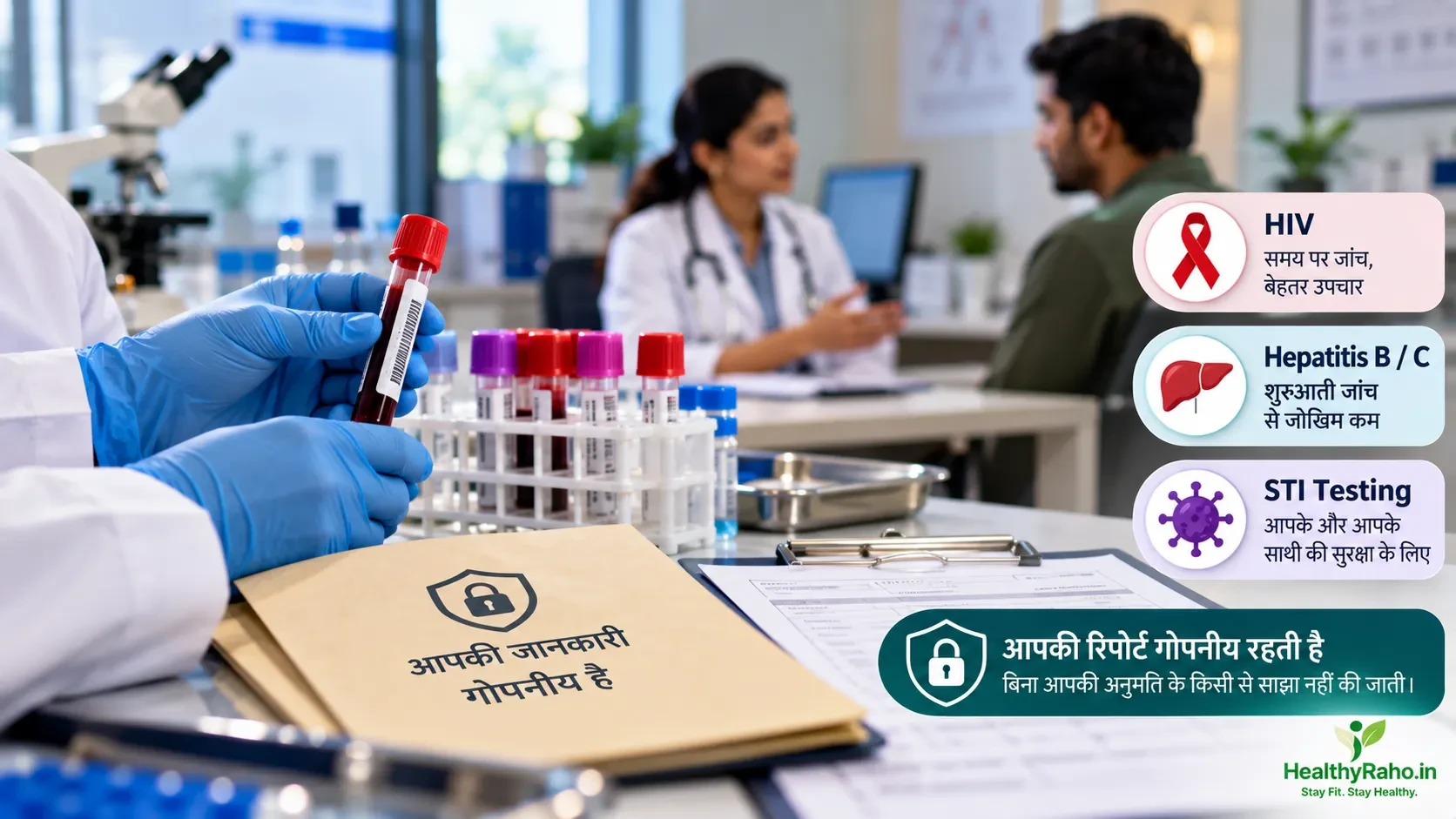
यह हिस्सा सबसे संवेदनशील है।
HIV, Hepatitis B, Hepatitis C और sexually transmitted infections जैसी conditions के लिए testing medical care का हिस्सा हो सकती है। लेकिन इन tests की चर्चा करते समय consent, confidentiality और stigma को नजरअंदाज नहीं किया जा सकता।
National Sickle Cell Mission की guidance में भी premarital testing के संदर्भ में patient confidentiality पर जोर दिया गया है और कहा गया है कि screening results को सार्वजनिक रूप से share नहीं किया जाना चाहिए, क्योंकि इससे व्यक्ति को गंभीर social consequences हो सकते हैं।
इसलिए किसी future screening system में केवल “test कौन-सा होगा?” पूछना पर्याप्त नहीं होगा।
यह भी तय करना पड़ेगा:
Report किसे मिलेगी?
क्या result केवल individual को मिलेगा या couple को?
क्या परिवार को access होगा?
क्या marriage registrar report देख सकेगा?
Medical data कितने समय तक store होगा?
Data leak होने पर क्या protection होगी?
यानी privacy screening system का optional feature नहीं, उसका core हिस्सा होना चाहिए।
👶 क्या शादी से पहले Fertility Test कराना चाहिए?
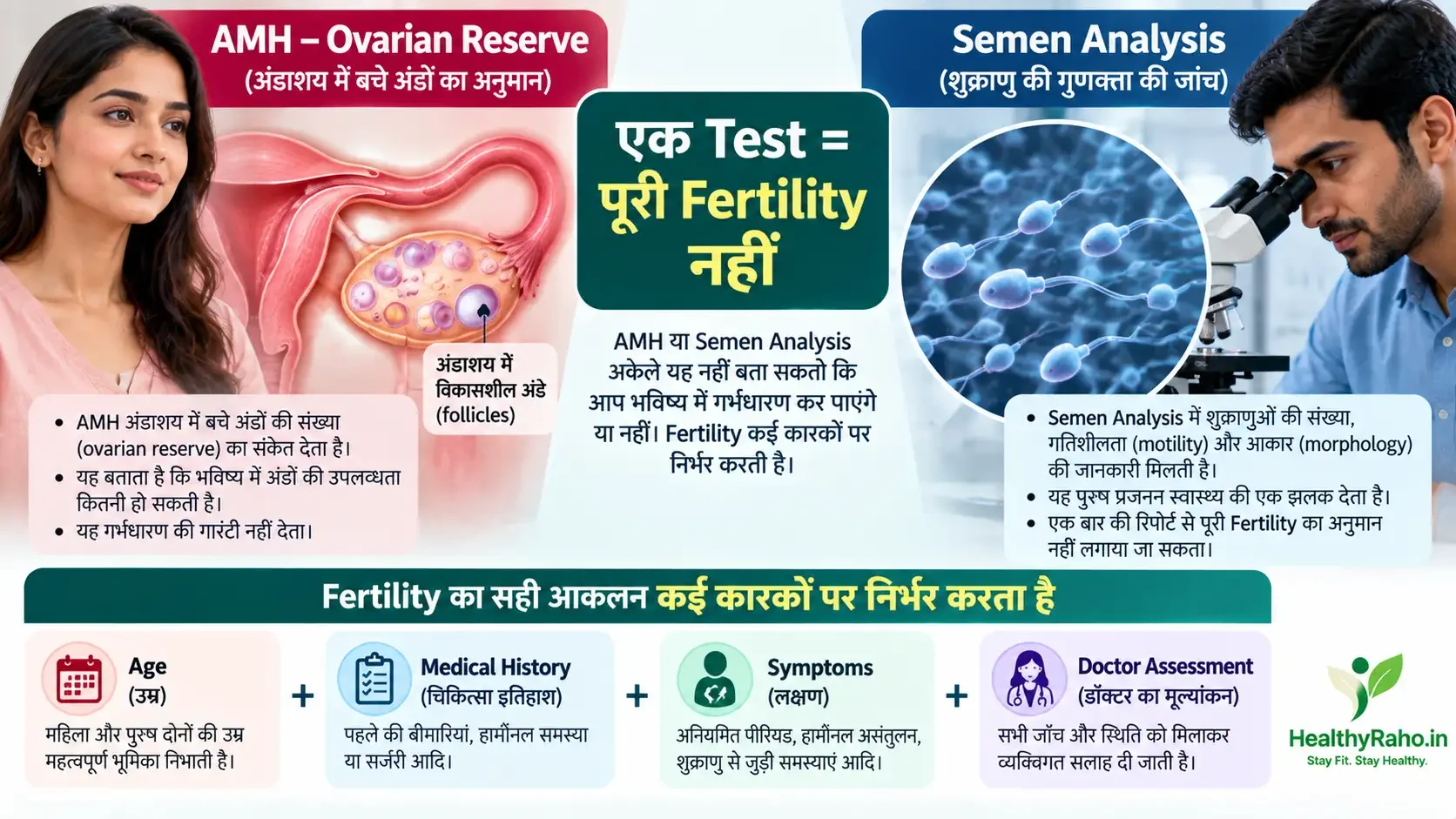
यह सवाल अक्सर पूछा जाता है, लेकिन इसका जवाब “हर किसी को हां” नहीं है।
हर पुरुष का semen analysis और हर महिला का AMH test शादी से पहले routine requirement नहीं माना जाना चाहिए।
क्योंकि fertility कोई single-number test नहीं है।
AMH ovarian reserve के बारे में information दे सकता है, लेकिन इसे भविष्य में pregnancy होगी या नहीं, इसका simple yes/no test समझना सही नहीं है। इसी तरह semen analysis पुरुष reproductive health के बारे में महत्वपूर्ण information दे सकता है, लेकिन अकेले इससे किसी व्यक्ति की पूरी future fertility तय नहीं होती।
इसलिए fertility assessment को age, symptoms, medical history, previous reproductive problems और couple की concerns के आधार पर doctor-guided रखना ज्यादा practical है।
वरना health screening धीरे-धीरे “fertility certificate” में बदल सकती है-और यह medical information से ज्यादा social pressure पैदा कर सकता है।
🧠 Mental Health Screening: यहां सबसे ज्यादा सावधानी क्यों चाहिए?
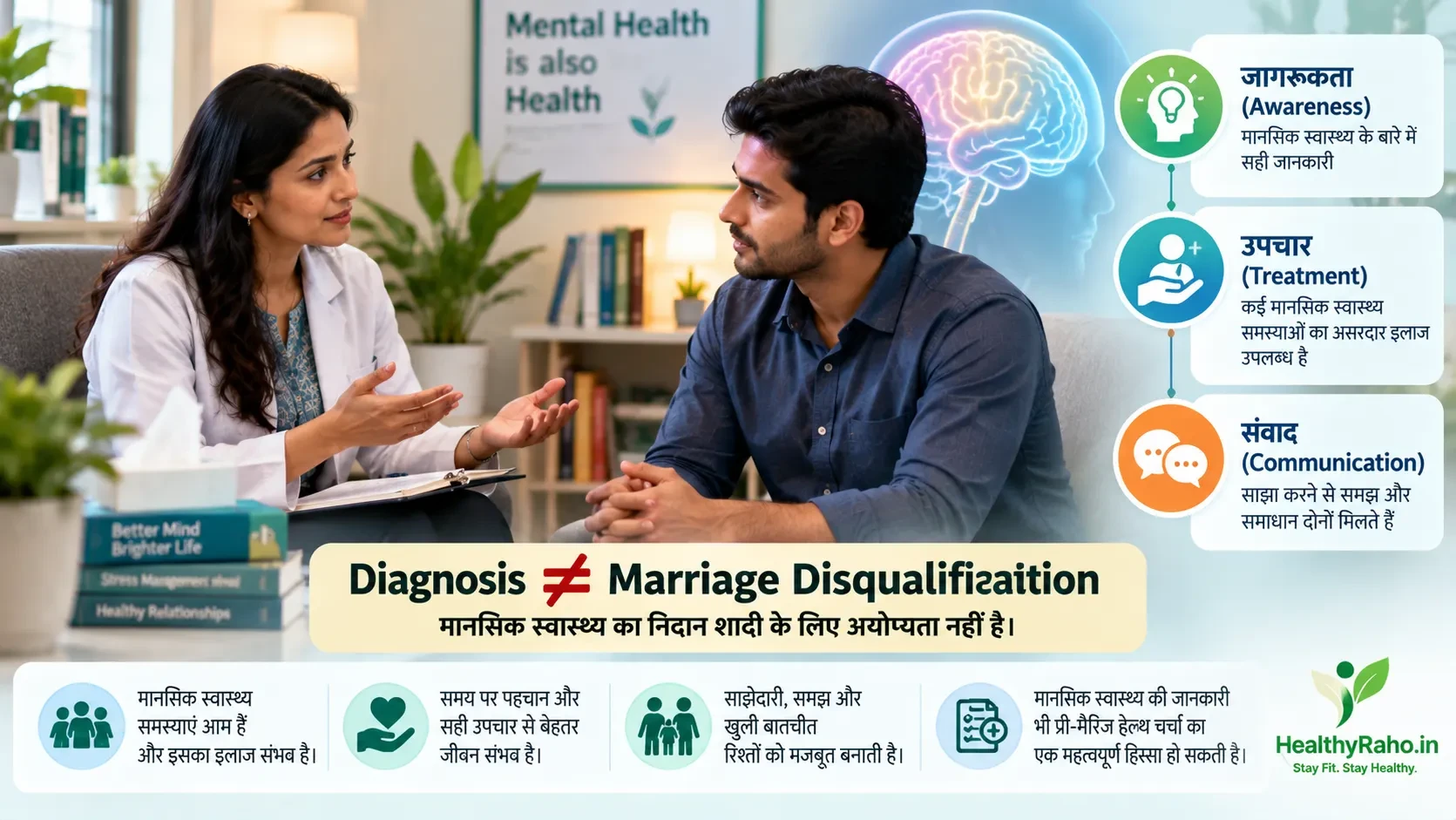
Mental health भी overall health का हिस्सा है। लेकिन किसी व्यक्ति की mental-health diagnosis को सीधे “शादी के लिए fit” या “unfit” से जोड़ना बेहद simplistic approach होगी।
अगर कोई व्यक्ति depression, anxiety, bipolar disorder, PTSD या किसी दूसरी mental-health condition के लिए treatment ले रहा है, तो केवल diagnosis के आधार पर उसकी relationship या marriage suitability तय नहीं की जा सकती।
इसलिए अगर future health screening में mental health assessment शामिल किया जाता है, तो उसका उद्देश्य होना चाहिए:
awareness + treatment + communication
न कि:
diagnosis = rejection
किसी भी health information की तरह यहां भी privacy और informed communication महत्वपूर्ण हैं।
🔄 शादी से पहले Screening से वास्तव में क्या फायदा हो सकता है?
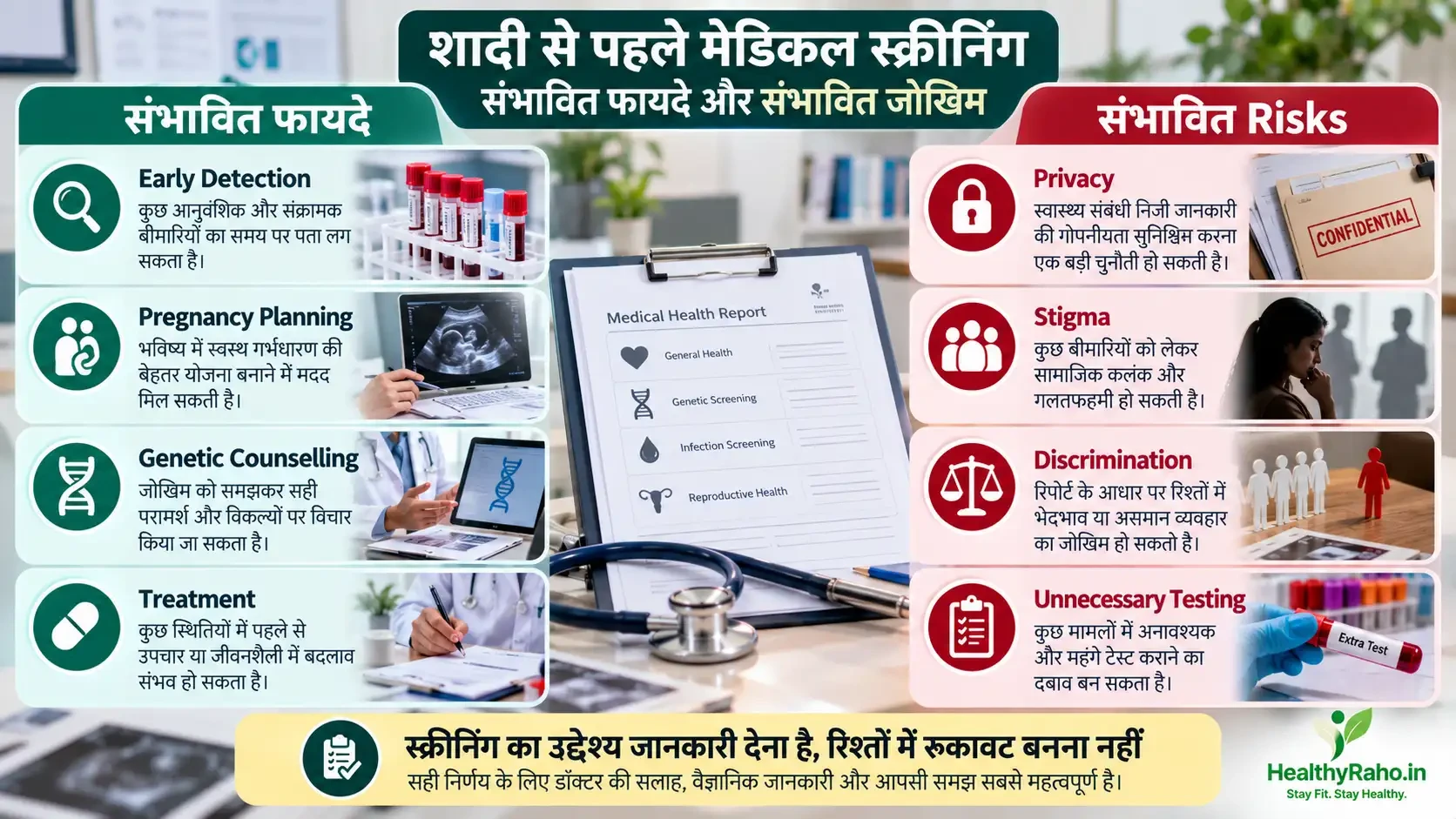
मान लीजिए एक couple को शादी से पहले पता चलता है कि दोनों किसी inherited blood disorder के carriers हैं।
यह जानकारी अपने आप में कोई “पास या फेल” result नहीं है। लेकिन अब couple के पास pregnancy से पहले genetic counselling लेने, reproductive options समझने और अपनी planning पर विचार करने का समय है।
यही screening का सबसे practical benefit हो सकता है। समस्या का पता लगाना ही नहीं, बल्कि निर्णय लेने के लिए समय देना।
संभावित फायदे
1. Genetic risk की पहचान
कुछ hereditary conditions में carrier status बिना obvious symptoms के हो सकता है। Screening ऐसे risks को सामने ला सकती है।
2. Pregnancy planning
अगर दोनों partners किसी relevant inherited condition के carriers हैं, तो genetic counselling के जरिए future pregnancy risk समझा जा सकता है।
3. Chronic disease awareness
पहले से diagnosed disease या risk factor होने पर treatment और lifestyle planning बेहतर तरीके से की जा सकती है।
4. कुछ infections का early diagnosis
जहां medically appropriate हो, testing से infection का पता जल्दी चल सकता है और treatment तथा prevention पर चर्चा की जा सकती है।
5. Health-related conversations आसान होना
कई couples बीमारी से ज्यादा बीमारी के बारे में बात करने से डरते हैं। Structured counselling इस conversation को थोड़ा आसान बना सकती है।
⚠️ लेकिन Mandatory Screening के Risks भी हैं
यहीं से debate complicated हो जाती है।
❌ 1. “Medical Fitness” का गलत इस्तेमाल
अगर किसी report में सिर्फ FIT / UNFIT लिखा गया, तो health screening आसानी से social screening बन सकती है।
Diabetes, controlled hypertension, PCOS, thalassemia trait या किसी अन्य health condition का होना अपने आप किसी व्यक्ति को शादी के लिए “unfit” नहीं बनाता।
❌ 2. Genetic Stigma
Carrier status को लोग बीमारी समझ सकते हैं।
Indian medical literature में भी premarital screening के साथ stigma और marriage-related social consequences की चिंता सामने आई है। एक Indian Journal of Medical Research review ने specifically चेताया था कि carriers के बीच शादी से बचने की सलाह stigma पैदा कर सकती है और ऐसी strategy को सामान्य preventive approach के रूप में advocate नहीं किया गया।
❌ 3. महिलाओं पर ज्यादा सामाजिक दबाव
अगर fertility या reproductive health testing को mandatory बनाया गया, तो उसका सामाजिक दबाव महिलाओं पर disproportionate रूप से पड़ सकता है।
❌ 4. Privacy Breach
Medical report अगर परिवार, रिश्तेदार, matrimonial platform या किसी दूसरे unauthorized व्यक्ति तक पहुंच जाए, तो परिणाम test से कहीं ज्यादा गंभीर हो सकते हैं।
❌ 5. False Reassurance
Normal report का मतलब यह नहीं कि व्यक्ति को भविष्य में कोई बीमारी नहीं होगी।
Screening कुछ specific conditions या risks को एक particular point in time पर detect करती है। यह भविष्य की पूरी health guarantee नहीं है।
❌ 6. Unnecessary Testing का बाजार
अगर regulation के बिना “complete marriage health package” popular हो गया, तो unnecessary tests और expensive genetic panels की मांग बढ़ सकती है।
इसलिए किसी भी future framework में standardized protocols, quality control और trained counselling महत्वपूर्ण होंगे।
⚖️ Mandatory Test या Voluntary Screening-असल बहस क्या है?

इस debate को केवल “test होना चाहिए या नहीं?” कहना थोड़ा अधूरा है।
एक तरफ public-health argument है कि कुछ inherited diseases और infections की early identification से लोगों को useful information मिल सकती है।
दूसरी तरफ autonomy, consent, privacy और discrimination के सवाल हैं।
भारत का 2019 Bill compulsory genetic testing का प्रस्ताव रखता था, जबकि current health guidance में genetic counselling के context में informed consent और non-directive counselling पर जोर मिलता है। National Sickle Cell Mission स्पष्ट रूप से कहता है कि counselling का उद्देश्य information देना और individual/couple को अपना decision लेने देना है।
इसलिए policy discussion में केवल testing पर नहीं, पूरे system पर ध्यान देना जरूरी होगा:
Testing accessible हो
Cost barrier कम हो
Consent स्पष्ट हो
Results confidential हों
Positive screening की confirmation हो
Genetic counselling उपलब्ध हो
किसी को “marriage unfit” label न किया जाए
Reproductive options की neutral information दी जाए
यानी health information और marriage eligibility को दो अलग चीजों के रूप में देखना जरूरी है।
🌍 Oman में 2026 से Mandatory Premarital Examination
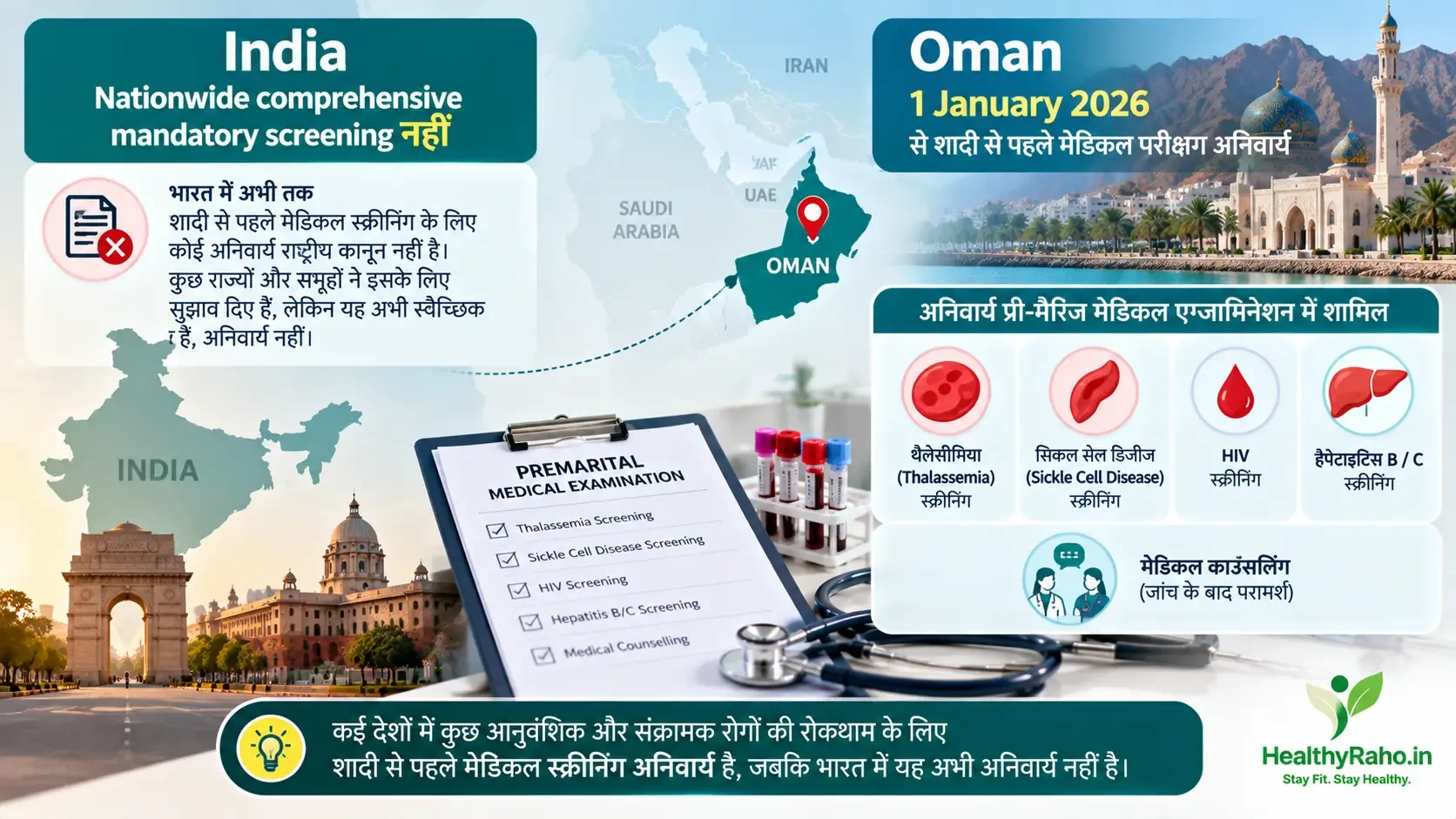
भारत के बाहर भी premarital screening के अलग-अलग models मौजूद हैं।
Oman में Royal Decree No. 111/2025 के तहत 1 जनवरी 2026 से Omani citizens के लिए premarital medical examination को marriage contract से पहले अनिवार्य किया गया। Decree के अनुसार examination के results के बारे में दोनों intending spouses को जानकारी और जरूरत के अनुसार medical counselling दी जानी है। इसमें medical examination के results को third parties के साथ disclose करने पर भी रोक का प्रावधान है।
यह example इसलिए महत्वपूर्ण है क्योंकि यहां mandatory requirement का focus केवल test पर नहीं है। Examination के साथ counselling और confidentiality भी framework का हिस्सा हैं।
भारत और Oman की population, healthcare system और legal framework अलग हैं। इसलिए Oman के model को सीधे भारत पर लागू करने का निष्कर्ष निकालना उचित नहीं होगा।
लेकिन यह जरूर दिखाता है कि अगर कोई देश premarital examination को mandatory बनाता है, तो testing के साथ privacy, counselling और implementation rules भी जरूरी होते हैं।
🧩 अगर भारत में Future में Framework बने तो कैसा हो सकता है?
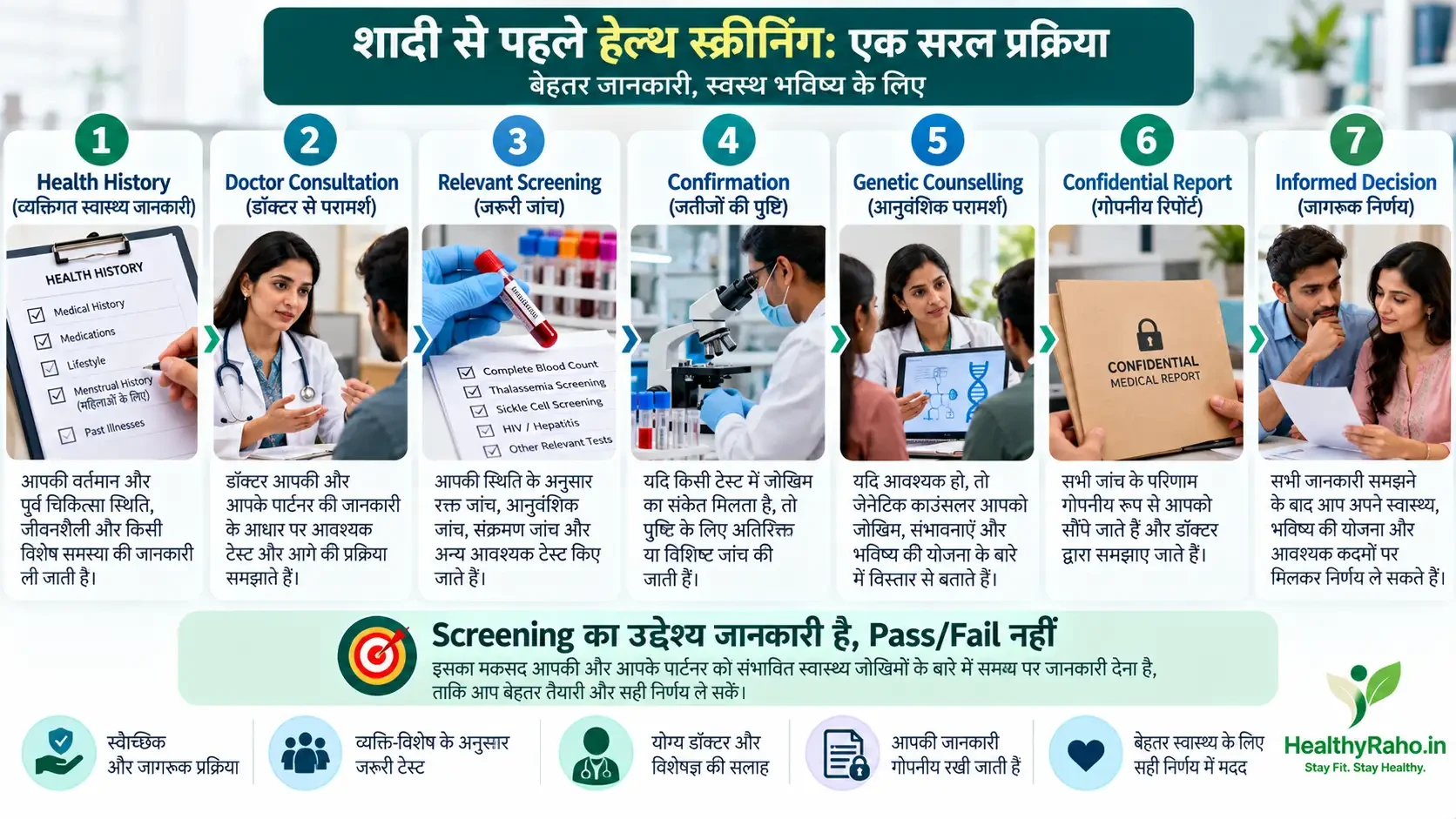
किसी संभावित policy को practical तरीके से देखें तो process कुछ इस तरह समझा जा सकता है:
Step 1 :- Health history
दोनों partners अपनी medical और family history के बारे में जानकारी दें।
Step 2 :- Doctor consultation
Risk factors और medical history के आधार पर doctor तय करे कि कौन-से tests relevant हैं।
Step 3 :- Relevant screening
जरूरत के अनुसार basic health, haemoglobinopathy, infectious disease या अन्य screening की जाए।
Step 4 :- Genetic counselling
अगर genetic risk सामने आता है, तो trained counsellor result का सही अर्थ समझाए।
Step 5 :- Confirmation
जहां screening result diagnostic नहीं है, वहां appropriate confirmatory testing की जाए।
Step 6 :- Reproductive counselling
At-risk couples को pregnancy planning और उपलब्ध medical options के बारे में neutral information दी जाए।
Step 7 :- Confidential report
Medical information individual या couple तक सीमित रहे और unauthorized disclosure से सुरक्षा हो।
Step 8 :- No “marriage disqualification”
Medical condition को automatic marriage eligibility test न बनाया जाए।
Step 9 :- Independent decision
अंतिम decision adults को informed information के आधार पर खुद लेने दिया जाए।
🛡️ Privacy: सबसे पहले यह सवाल पूछना जरूरी है
कल्पना कीजिए कि किसी future screening system में किसी व्यक्ति की report positive आती है।
अब असली सवाल test नहीं, data है।
क्या report केवल व्यक्ति को मिलेगी?
क्या prospective partner को जानकारी मिलेगी?
क्या parents को access मिलेगा?
क्या marriage registrar उसे देख सकेगा?
क्या report किसी government database में store होगी?
अगर database leak हो जाए तो क्या होगा?
इन सवालों का जवाब screening शुरू करने से पहले तय होना चाहिए।
National Sickle Cell Mission की guidance भी premarital testing के संदर्भ में screening results की confidentiality पर जोर देती है और public disclosure से होने वाले संभावित social consequences को पहचानती है।
इसलिए “test करा लिया” से ज्यादा महत्वपूर्ण है “result सुरक्षित कैसे रहेगा?”
🚨 सबसे जरूरी बात: बीमारी को “शादी के लायक या नालायक” का पैमाना न बनाएं
यही इस पूरे topic का सबसे sensitive हिस्सा है।
👉 किसी व्यक्ति को diabetes है। इससे वह शादी के लिए automatically unfit नहीं हो जाता।
👉 किसी को controlled hypertension है। यह अपने आप marriage eligibility तय नहीं करता।
👉 किसी महिला को PCOS है। यह कोई “marriage fitness” diagnosis नहीं है।
👉 किसी व्यक्ति में thalassemia trait है। इसका अर्थ thalassemia major होना नहीं है।
और किसी genetic carrier को केवल carrier होने की वजह से social rejection का सामना करना पड़े, यह screening के public-health उद्देश्य को ही कमजोर कर सकता है।
National Sickle Cell Mission भी carrier और disease के बीच फर्क स्पष्ट करता है तथा counselling को non-directive रखने की बात करता है।
इसलिए medical report का सबसे अच्छा उपयोग है:
Risk समझना → सही जानकारी लेना → options जानना → informed decision लेना।
💡 अभी कानून नहीं है तो शादी करने वाले Couples क्या करें?
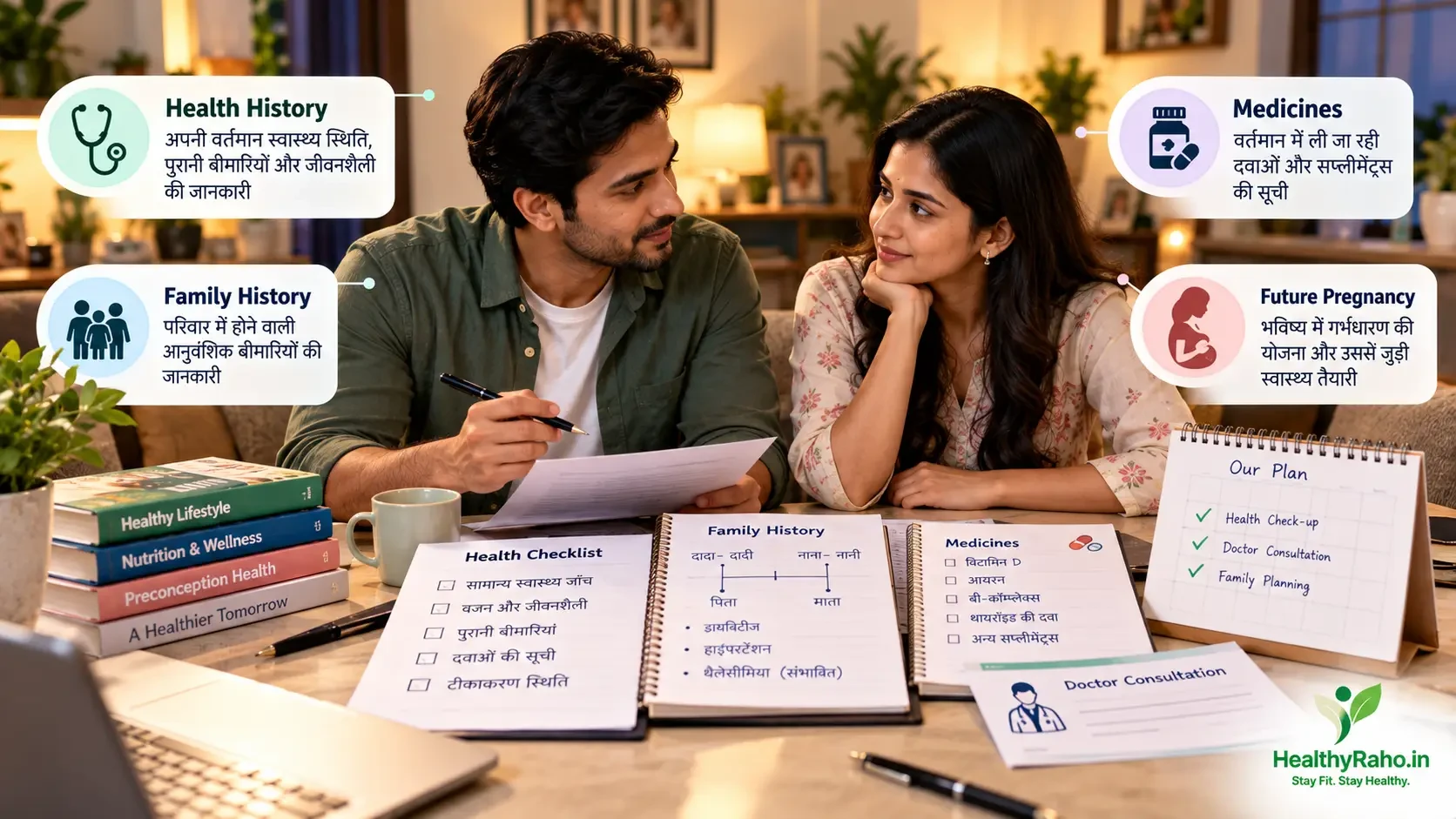
किसी नए कानून का इंतजार करना जरूरी नहीं है।
अगर शादी अगले कुछ महीनों में है, तो सबसे पहले partner के साथ एक honest health conversation शुरू की जा सकती है।
🩺 1. Major health conditions
क्या diabetes, hypertension, epilepsy, asthma, kidney disease, heart disease या कोई दूसरी chronic condition है?
💊 2. Long-term medicines
क्या कोई ऐसी दवा लंबे समय से चल रही है जिसे future pregnancy या दूसरे health decisions के संदर्भ में जानना जरूरी हो?
🧬 3. Family history
क्या परिवार में thalassemia, sickle-cell disease या कोई known inherited condition रही है?
👶 4. Future pregnancy planning
क्या दोनों बच्चे चाहते हैं? अगर हां, तो कब?
❤️ 5. Reproductive health
कोई known reproductive problem या previous medical concern है तो doctor से confidentially discuss करें।
🦠 6. Infection testing
अगर किसी specific medical reason या risk के कारण testing relevant है, तो qualified doctor से appropriate test और counselling के बारे में पूछें।
🧠 7. Mental health
अगर कोई current treatment या significant mental-health history है, तो stigma के बजाय respectful और honest communication ज्यादा उपयोगी है।
🔬 कौन-से Tests सिर्फ शादी की वजह से नहीं कराने चाहिए?
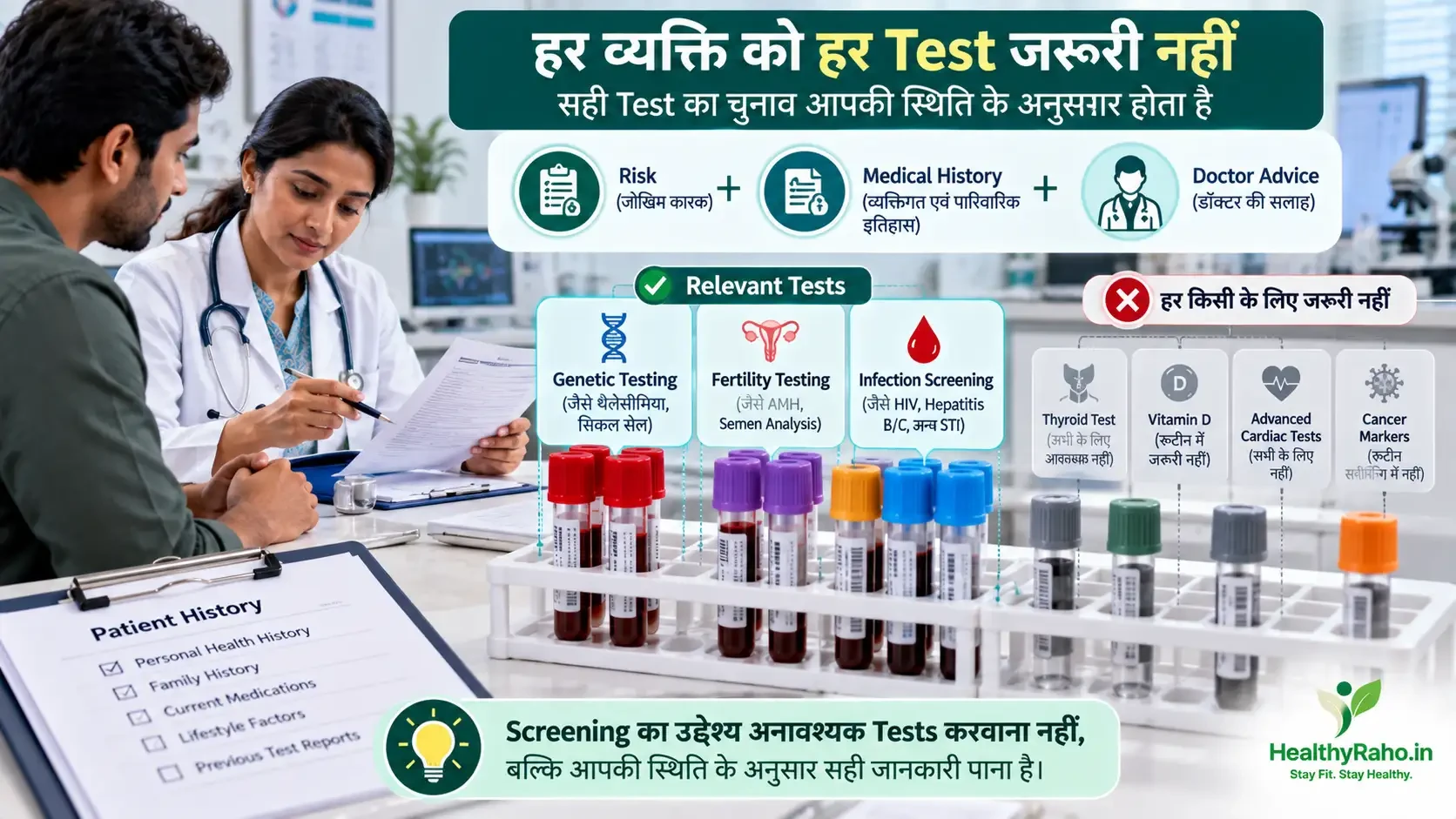
यह हिस्सा खास तौर पर याद रखने लायक है।
❌ केवल शादी के कारण random 40–50 test package न लें।
❌ बिना medical indication के expensive genetic panel न कराएं।
❌ AMH को “female fertility certificate” न समझें।
❌ Blood group difference को marriage compatibility test न मानें।
❌ Carrier status को बीमारी समझकर फैसला न करें।
❌ Screening result को final diagnosis न मानें।
❌ Sensitive medical reports को family WhatsApp group या relatives के साथ share न करें।
❌ Online “Marriage Fitness Certificate” को qualified medical assessment का substitute न मानें।
एक useful principle याद रखें:
Screening → Confirmation → Counselling → Informed decision
सिर्फ पहला step पूरा करने से पूरी medical picture नहीं मिलती।
🧠 असली समस्या क्या है? एक आसान Framework
पूरी debate को चार सवालों में समझना ज्यादा आसान है।
Problem 1: महत्वपूर्ण health information छिप जाना
Possible approach: शादी से पहले respectful health discussion और जरूरत होने पर doctor counselling।
Problem 2: Genetic disease का reproductive risk
Possible approach: relevant carrier screening + genetic counselling।
Problem 3: Infection risk
Possible approach: medically appropriate testing + consent + treatment/prevention counselling।
Problem 4: Privacy और discrimination
Possible approach: strict confidentiality, secure data handling और safeguards against misuse।
इससे एक बात साफ होती है:
एक single “marriage medical test” इन सभी समस्याओं को solve नहीं कर सकता।
🩺 अगर आपकी शादी अगले 6–12 महीनों में है, तो क्या करें?
सबसे पहले panic करने की जरूरत नहीं है।
आपको कोई random “complete marriage package” खरीदने की जरूरत भी नहीं है।
इसके बजाय:
1. Partner के साथ major health conditions और long-term medicines पर खुलकर बात करें।
2. Family में thalassemia, sickle-cell disease या कोई inherited disorder है तो doctor/genetic counsellor से बात करें।
3. अगर pregnancy की planning है, तो preconception consultation useful हो सकती है। Indian guidance haemoglobinopathy screening को preconception period या pregnancy की शुरुआत में महत्वपूर्ण मानती है।
4. किसी infection, chronic disease या reproductive problem का known history है तो qualified doctor से confidential assessment लें।
5. Report को “पास/फेल” की तरह न देखें।
Medical screening का उद्देश्य किसी इंसान को label करना नहीं, बल्कि future decisions के लिए बेहतर information देना होना चाहिए।
❓ Pre-Marriage Medical Screening से जुड़े 12 जरूरी सवाल
1. क्या भारत में शादी से पहले Medical Test अभी mandatory है?
👉 नहीं। सितंबर 2026 तक हर शादी के लिए comprehensive nationwide mandatory medical screening की लागू केंद्रीय व्यवस्था नहीं है।
2. क्या भारत में ऐसा कोई Bill आया था?
👉 हां। 26 जुलाई 2019 को Free and Compulsory Pre-Marital Genetic Testing Bill, 2019 लोकसभा में पेश किया गया था। यह Bill था, nationwide लागू law नहीं।
3. 2019 के Bill में किस तरह की testing की बात थी?
👉 इसका मुख्य उद्देश्य sickle-cell anaemia और thalassemia जैसे common genetic blood disorders की पहचान के लिए free और compulsory pre-marital genetic testing का प्रस्ताव रखना था।
4. क्या thalassemia carrier होने का मतलब बीमारी होना है?
👉 नहीं। Carrier status और disease अलग स्थितियां हैं। इसलिए report का अर्थ समझने के लिए proper counselling जरूरी हो सकती है।
5. अगर दोनों partners carrier हों तो क्या बच्चा हमेशा affected होगा?
👉 नहीं। यदि दोनों एक ही autosomal recessive condition के carriers हैं, तो प्रत्येक pregnancy में affected child का risk सामान्यतः 25% हो सकता है। Exact risk condition और genetic findings पर निर्भर करता है।
6. क्या blood group शादी से पहले compatibility test है?
👉 नहीं। ABO या Rh blood-group difference को सामान्य marriage compatibility test की तरह समझना सही नहीं है।
7. क्या हर couple को fertility test कराना चाहिए?
👉 नहीं। Fertility assessment व्यक्ति की age, medical history, symptoms और reproductive concerns के अनुसार doctor-guided होना चाहिए।
8. क्या HIV या STI testing शादी से पहले की जा सकती है?
👉 हां, जहां medically appropriate हो वहां testing healthcare का हिस्सा हो सकती है। लेकिन consent, counselling और confidentiality महत्वपूर्ण हैं।
9. क्या mental-health history partner से discuss करनी चाहिए?
👉 महत्वपूर्ण health information को लेकर honest और respectful communication उपयोगी हो सकती है। लेकिन किसी mental-health diagnosis को automatic marriage disqualification मानना उचित नहीं है।
10. क्या medical report parents को देनी चाहिए?
👉 Medical information sensitive होती है। इसे किसके साथ share किया जाए, यह privacy और consent के principles के अनुसार तय होना चाहिए। Premarital sickle-cell testing guidance भी results की confidentiality पर जोर देती है।
11. क्या positive screening result final diagnosis होता है?
👉 जरूरी नहीं। कई screening tests में आगे confirmatory testing की आवश्यकता हो सकती है।
12. शादी से पहले सबसे जरूरी health test कौन-सा है?
👉 कोई एक “magic test” नहीं है।
ज्यादा practical approach है:
Medical history + family history + doctor-guided relevant screening + जरूरत होने पर genetic counselling + honest communication.
🔚 निष्कर्ष: शादी से पहले “Fitness Certificate” नहीं, सही जानकारी जरूरी है
शादी से पहले medical screening की बहस को सिर्फ “test होना चाहिए या नहीं?” तक सीमित करना आसान है। लेकिन असली सवाल इससे बड़ा है।
अगर किसी couple को thalassemia या sickle-cell जैसी inherited condition का risk पहले पता चलता है, तो वे pregnancy planning से पहले counselling और available options के बारे में जानकारी ले सकते हैं। Indian medical guidance भी haemoglobinopathy screening और counselling को prevention strategy का महत्वपूर्ण हिस्सा मानती है।
लेकिन दूसरी तरफ, compulsory testing में privacy, stigma, discrimination और medical information के misuse का risk भी मौजूद है।
इसलिए भविष्य में अगर भारत इस विषय पर कोई nationwide framework बनाता है, तो बहस केवल यह नहीं होनी चाहिए कि “कौन-सा test mandatory होगा?”
बड़ा सवाल होना चाहिए:
क्या दो adults को शादी और future family planning का फैसला लेने से पहले जरूरी health information, सही counselling और पर्याप्त privacy मिल रही है?
यही फर्क “medical fitness test” और “informed health decision” के बीच है।
शादी से पहले हर बीमारी का पता लगाना संभव नहीं है। लेकिन जिन health risks के बारे में पहले से जानकारी मिल सकती है, उन्हें समझना और सही समय पर medical advice लेना निश्चित रूप से ज्यादा उपयोगी है।
ज़रूर पढ़ें
- 💉 HPV Vaccine: कैंसर से बचाव का सबसे बड़ा कवच या अब भी अनजाना सच?
- 💧 चिया वाटर से हर घर जल तक: पानी की पूरी कहानी
- नींद पूरी होने के बाद भी थकान क्यों रहती है? जानिए असली कारण
- फैटी लिवर को प्रभावी ढंग से नियंत्रित करने के 5 तरीके - सिर्फ 2 महीने में