From Jawbone Removal to Jaw Reconstruction: How Surgeons Rebuild What Cancer Takes Away

MBBS MS M.Ch (Surgical Oncology)
Reg. No: Maharashtra Medical Council (No. 2008113798)

For patients diagnosed with advanced oral or jaw cancer, surgery may involve removing a portion of the jawbone along with the tumour. This can be an important step in controlling the disease, but it may also leave a significant gap in the structure of the face. Such changes can affect everyday activities, including chewing food, speaking clearly, swallowing and maintaining facial symmetry.
Modern reconstructive surgery has made it possible to rebuild many of these defects using tissue from other parts of the patient's body. Although recovery takes time and results vary from person to person, reconstruction can help patients regain important functions and adapt to life after cancer treatment.
Jaw reconstruction is therefore not just about appearance. It is an important part of planning treatment that considers the patient's future function, comfort and quality of life.
📝 In This Article, You Will Learn
Why jaw reconstruction may be necessary after cancer surgery.
How removing part of the jawbone can affect daily activities.
What free flap reconstruction involves.
How surgeons use bone and blood vessels from another part of the body.
Whether patients can eat and speak normally after reconstruction.
What factors influence recovery after jaw surgery.
Why dental rehabilitation and supportive therapies matter.
What patients should understand before undergoing reconstructive surgery.
1. Why Does Jaw Reconstruction Become Necessary?
The jawbone plays an important role in several everyday functions. It supports the teeth, helps with chewing and contributes to speech, swallowing and the overall structure of the lower face.
When a cancerous tumour involves the jawbone, surgeons may need to remove the affected section to achieve complete removal of the cancer. The exact amount of bone and surrounding tissue removed depends on the location, size and extent of the tumour.
Although this surgery may be necessary for cancer control, the resulting defect can create functional and physical challenges. Depending on the extent of the removal, patients may experience difficulty chewing food, changes in speech, problems with swallowing or alterations in facial symmetry.
For some patients, the loss of jawbone can also affect the support available for future dental rehabilitation. This may influence how they eat and how they feel about their appearance.
Jaw reconstruction aims to address these challenges by rebuilding the missing structure as effectively as possible. The objective is to create a stable framework that supports facial structure and helps restore function.
The treatment plan must balance two important priorities: removing the cancer adequately and reconstructing the defect in a way that supports the patient's recovery.
2. How Does Removing Part of the Jaw Affect Daily Life?
The impact of jaw surgery depends on how much bone and surrounding tissue must be removed. A smaller defect may have different consequences from a more extensive removal involving a substantial portion of the lower jaw.
Chewing can become difficult when the jaw's structure or the position of the teeth is affected. Some patients may need changes in food consistency during recovery, while others may require additional support to improve their ability to eat.
Speech may also change after surgery, particularly when the procedure affects the structures involved in producing clear sounds. Similarly, swallowing can be affected depending on the extent of surgery and whether other tissues in the mouth or throat are involved.
Facial appearance is another important consideration. The jaw helps maintain the shape and balance of the lower face, and removing a significant portion can alter its contour.
These changes can affect confidence and emotional well-being. Patients may feel concerned about eating in public, communicating with others or adjusting to changes in their appearance.
This is why reconstruction needs to be considered as part of the overall cancer treatment plan rather than as a separate cosmetic procedure. The goal is to help patients recover as much function as possible while maintaining the priority of cancer control.
3. How Is the Missing Jawbone Rebuilt?
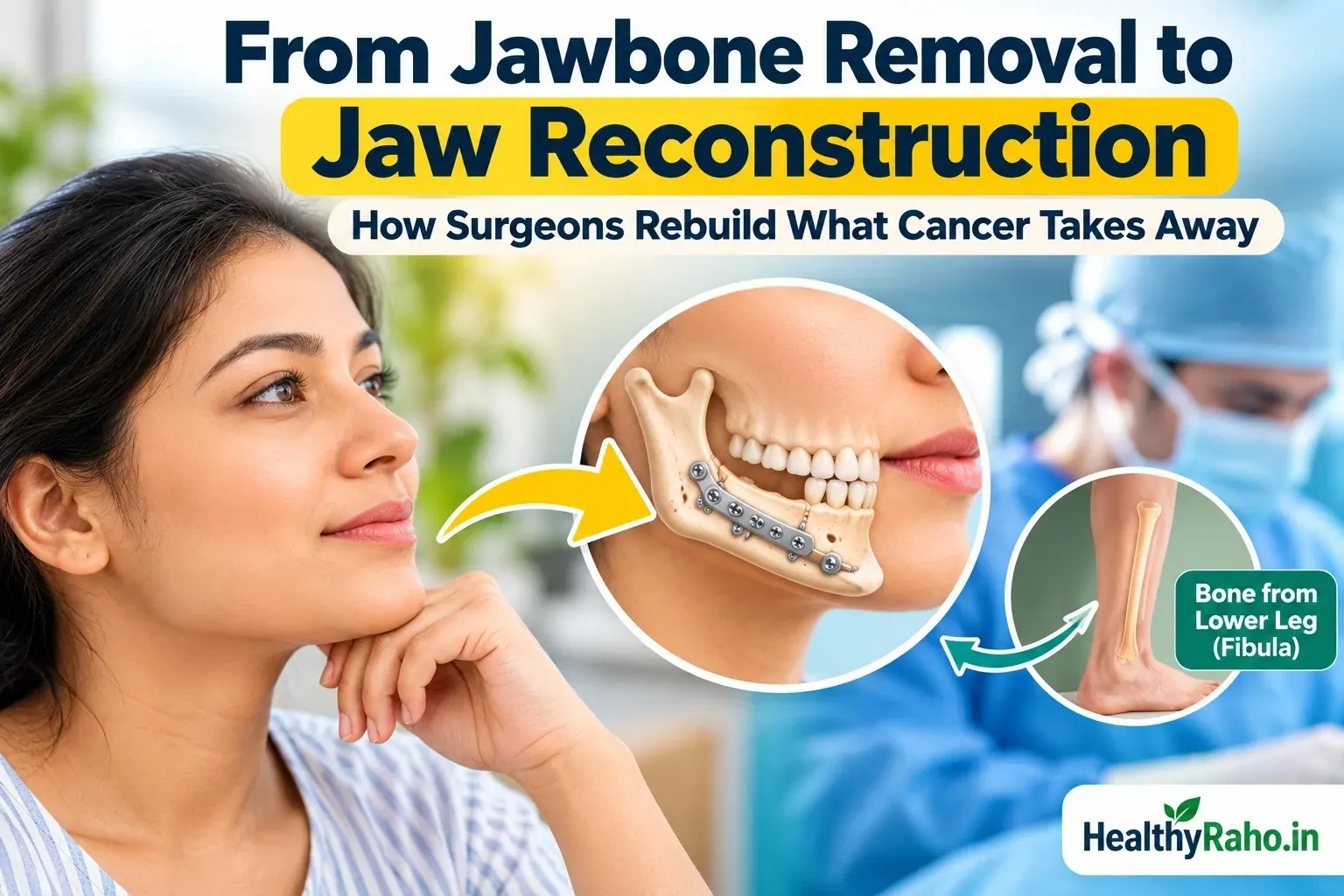
One commonly used approach for major lower-jaw defects is free flap reconstruction. This technique involves transferring tissue from another part of the patient's body to rebuild the area affected by surgery.
Depending on the patient's needs, surgeons may take a section of bone along with its blood vessels. Skin or muscle may also be included when required to reconstruct the surrounding soft tissue.
The lower leg is one possible donor site for obtaining bone for jaw reconstruction. The choice of tissue depends on the size and location of the defect, the condition of the surrounding tissues and the patient's overall health.
After the tissue is harvested, the surgeon carefully shapes the bone to match the missing portion of the jaw as closely as possible. The aim is to restore the continuity and structure of the jaw while creating a foundation that can support future functional rehabilitation.
The transferred tissue is then connected to blood vessels in the neck using microsurgery. This allows blood to circulate through the transplanted tissue and helps it survive in its new location.
Because the procedure involves several important steps, it requires detailed planning and specialised surgical expertise. The reconstructive team must consider the size of the defect, the available donor tissue and the patient's anticipated recovery needs.
4. What Is the Role of Microsurgery in Jaw Reconstruction?
Microsurgery is an important part of many free flap reconstruction procedures. It allows surgeons to connect very small blood vessels using specialised instruments and magnification.
When bone and other tissue are transferred from one part of the body to another, maintaining an adequate blood supply is essential. The transferred tissue needs circulation to support its survival and healing.
During reconstruction, the surgeon connects the blood vessels of the transferred tissue to suitable vessels in the neck. This helps establish blood flow through the transplanted tissue.
The procedure requires precision because the reconstructed jaw must heal while the transferred tissue receives the blood supply it needs. The surgical team monitors the patient closely after the operation to assess the reconstructed tissue and identify potential complications.
Microsurgical reconstruction is not suitable or necessary for every patient. The appropriate method depends on the nature of the defect, the patient's health and the overall treatment plan.
The decision is made after evaluating the individual patient's needs and the expected benefits and limitations of the available reconstructive options.
5. Can Patients Eat and Speak Normally Again?
One of the most common concerns among patients and their families is whether everyday functions can return after jaw reconstruction.
The answer depends on several factors, including the extent of the cancer, the amount of tissue removed, the success of reconstruction, the patient's overall health and whether additional treatments such as radiation therapy are required.
Reconstruction aims to provide a stable structure that can support recovery, but it does not guarantee that every patient will return to their previous level of function.
Eating may improve gradually as healing progresses. Patients may initially need guidance about food consistency and nutritional intake. Their diet can be adjusted according to their recovery, swallowing ability and the advice of their healthcare team.
Speech recovery also varies. Some patients may benefit from speech therapy to improve clarity and adapt to changes following surgery. Swallowing therapy may be recommended when the procedure affects the ability to swallow safely or comfortably.
Dental rehabilitation can be another important part of the process. Depending on the reconstructed jaw and the patient's recovery, further dental treatment may help restore chewing function.
These steps require patience and coordinated care. The focus is not only on completing surgery but also on helping the patient regain useful function over time.
6. Why Must Reconstruction Be Planned Alongside Cancer Surgery?
Reconstruction should be considered while planning the cancer operation, not only after the tumour has been removed.
The surgical team needs to understand the extent of tissue that may have to be removed and how the resulting defect can be rebuilt. This helps guide decisions about the type of reconstruction, the tissue required and the functional goals of treatment.
Planning also involves considering the patient's future needs. These may include eating comfortably, speaking clearly, maintaining facial structure and undergoing dental rehabilitation.
The approach must be tailored to the individual patient. A reconstruction plan that works well for one person may not be appropriate for another because the location of the tumour, the extent of surgery and the patient's general health can differ.
The priority remains complete removal of the cancer. Reconstruction is planned around this requirement to help restore function and structure as effectively as possible.
This coordinated approach can help patients and their families understand what the operation involves, what recovery may look like and which forms of rehabilitation might be needed.
7. What Factors Influence Recovery After Jaw Reconstruction?
Recovery following major jaw surgery is a gradual process. The time required and the final outcome vary depending on the individual circumstances.
Important factors include the extent of the cancer, the amount of bone and soft tissue removed, the complexity of reconstruction and the patient's overall health. Additional cancer treatments, including radiation therapy when indicated, may also influence the recovery journey.
After surgery, the healthcare team monitors healing and the condition of the reconstructed tissue. Patients receive guidance about wound care, nutrition, activity and follow-up appointments.
Rehabilitation may include dental care, speech therapy, swallowing therapy and nutritional support, depending on the patient's needs. These interventions are intended to address specific challenges and help patients gradually resume daily activities.
Patients should follow their treating team's instructions and report new or worsening symptoms promptly. Regular follow-up is important to monitor recovery and continue appropriate cancer care.
It is also important to understand that reconstruction is not a single event that immediately restores every function. It is one part of a longer treatment journey that may include healing, rehabilitation and further procedures when needed.
8. How Does Reconstruction Help Improve Quality of Life?
Surviving cancer is the first priority, but life after treatment also matters. Patients need support as they return to eating, communicating, socialising and managing their daily routines.
Reconstructive surgery can help restore the structure of the jaw and provide a foundation for improving important functions. For some patients, it can also help address changes in facial appearance following cancer removal.
These improvements can contribute to greater comfort and confidence. However, the extent of recovery differs, and patients may need additional treatment or rehabilitation to achieve their individual goals.
Emotional support is also important. Adjusting to cancer treatment and changes in appearance or function can be challenging for patients and families. Discussing concerns with the healthcare team can help patients understand available options and prepare for recovery.
The overall aim is to move beyond cancer removal alone and consider how patients can regain function, independence and quality of life.
Summary
Jaw reconstruction is an important part of treatment for selected patients who require removal of part of the jawbone because of cancer. While removing the tumour remains the priority, reconstructive surgery can help rebuild the missing structure and support eating, speech, swallowing, facial symmetry and future dental rehabilitation.
Free flap reconstruction is one commonly used technique for major lower-jaw defects. It involves transferring bone and its blood vessels, sometimes with skin or muscle, from another part of the body. Microsurgery helps connect the transferred tissue to blood vessels in the neck.
Recovery depends on the extent of surgery, the patient's health and any additional cancer treatment. Dental rehabilitation, nutritional support, speech therapy and swallowing therapy may help patients regain function gradually.
Planning reconstruction alongside cancer surgery allows the treatment team to consider both cancer control and the patient's long-term needs. The goal is to help patients move beyond survival towards better function, confidence and quality of life.
Frequently Asked Questions (FAQs)
1. Why is jaw reconstruction needed after cancer surgery?
Jaw reconstruction may be necessary when a cancer operation involves removing part of the jawbone. Rebuilding the missing section can help restore facial structure and support functions such as chewing, speech, swallowing and future dental rehabilitation.
2. Does every patient with jaw cancer need reconstruction?
No. The need for reconstruction depends on the location and extent of the tumour, how much jawbone must be removed and the patient's individual circumstances. The treating surgical team determines the most appropriate approach.
3. What is free flap reconstruction?
Free flap reconstruction is a surgical technique in which tissue, such as bone with its blood vessels and sometimes skin or muscle, is transferred from another part of the body to reconstruct the affected area.
4. Where do surgeons obtain bone for jaw reconstruction?
The bone may be taken from another part of the patient's body. The lower leg is one possible donor site for major lower-jaw reconstruction. The choice depends on the defect and the patient's needs.
5. What is the role of microsurgery in this procedure?
Microsurgery allows surgeons to connect the small blood vessels of the transferred tissue to blood vessels in the neck. This helps provide the blood supply required for the transplanted tissue to survive and heal.
6. Will patients be able to eat normally after jaw reconstruction?
Eating may improve as healing progresses, but outcomes vary. Some patients require changes in food consistency, nutritional support, dental rehabilitation or additional treatment to improve chewing function.
7. Can speech improve after jaw reconstruction?
Reconstruction can help restore the structure needed for function, but speech outcomes depend on the extent of surgery and the tissues involved. Some patients may benefit from speech therapy during recovery.
8. Does radiation therapy affect recovery?
Additional treatment, including radiation therapy when required, may influence the recovery process. The treating team considers the patient's complete cancer treatment plan when providing guidance about healing and rehabilitation.
9. How long does recovery from jaw reconstruction take?
Recovery varies according to the complexity of surgery, the patient's health and the need for further treatment. Healing and functional rehabilitation may take time, and patients should follow their healthcare team's advice.
10. What should patients discuss with their surgeon before surgery?
Patients should ask about the planned removal of cancerous tissue, the proposed reconstruction method, possible risks, expected functional outcomes, recovery, dental rehabilitation and any additional treatments that may be needed. Understanding the plan can help patients and families prepare for the treatment journey.
Dr. Amit Chakraborty specialises in cancers of the oral cavity, tongue, jaw, throat, larynx, salivary glands, thyroid, and advanced neck disease, focusing on complete oncological clearance while preserving speech, swallowing, and facial aesthetics wherever possible. Trained in advanced head and neck oncologic surgery, he has extensive experience in composite resections, microvascular free-flap reconstruction, mandibulectomy with reconstruction, and thyroid, parathyroid, and skull base surgery. His philosophy combines aggressive cancer control with meticulous reconstruction, integrating multidisciplinary tumour board decisions, precision surgery, and coordinated rehabilitation.
ज़रूर पढ़ें