7 Early Signs That Your Mental Health Needs Attention

MBBS, MS, DNB , FIJR orthopaedics

Nobody I know has ever walked into a counselling room and said, “Today I realised I had been unwell for a year.” It usually goes the other way. They sit down, a little embarrassed, and say, “Maybe I'm wasting your time. Nothing big has happened.”
But something had. It just came in slowly, the way damp spreads through a wall. You don't notice it until the paint starts to peel.
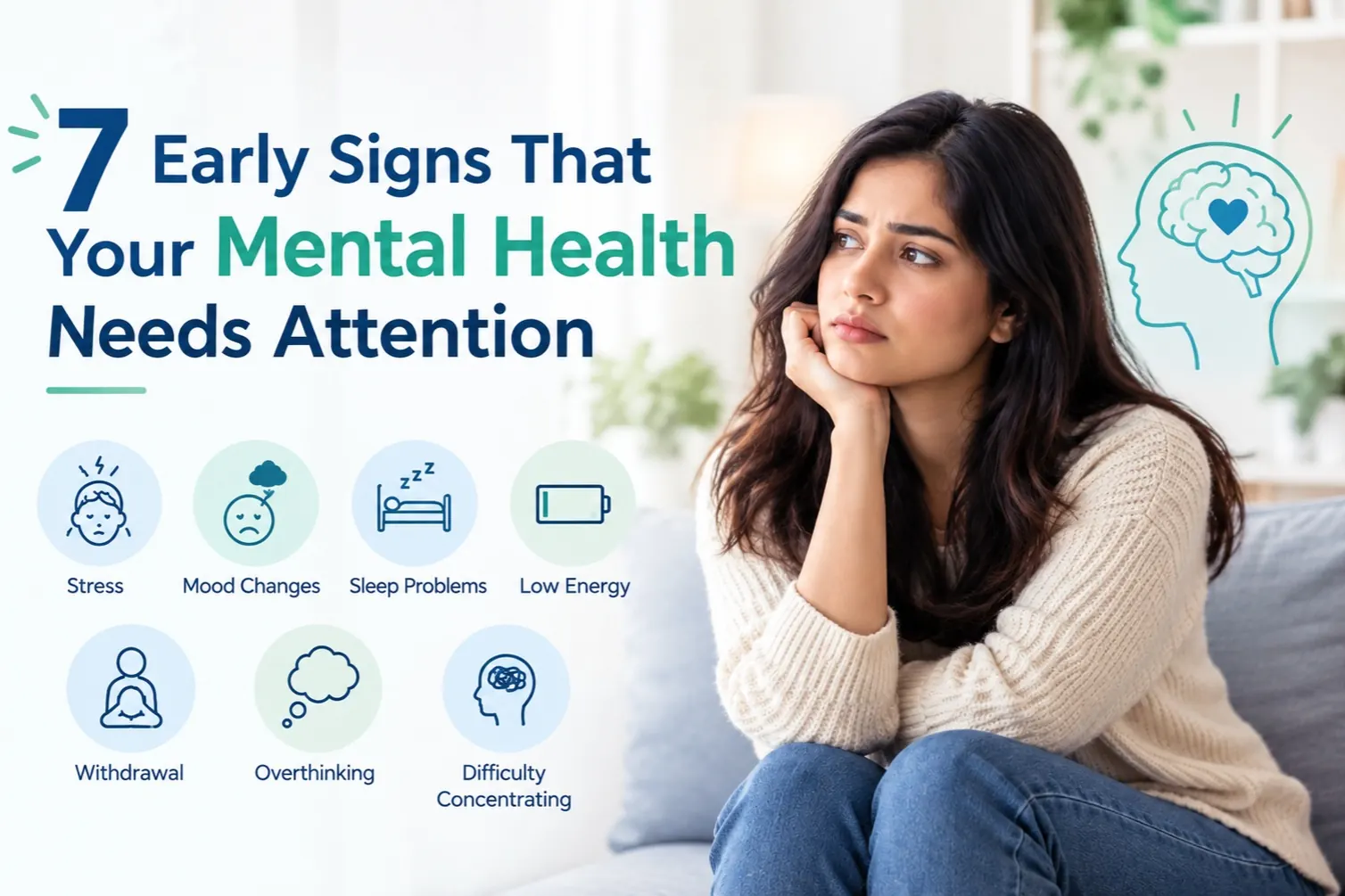
I have seen this pattern often enough in mental health counselling to say one thing clearly: the mind can give small hints long before the warning signs become difficult to ignore. Here are seven of them.
📝 In This Article, You Will Learn
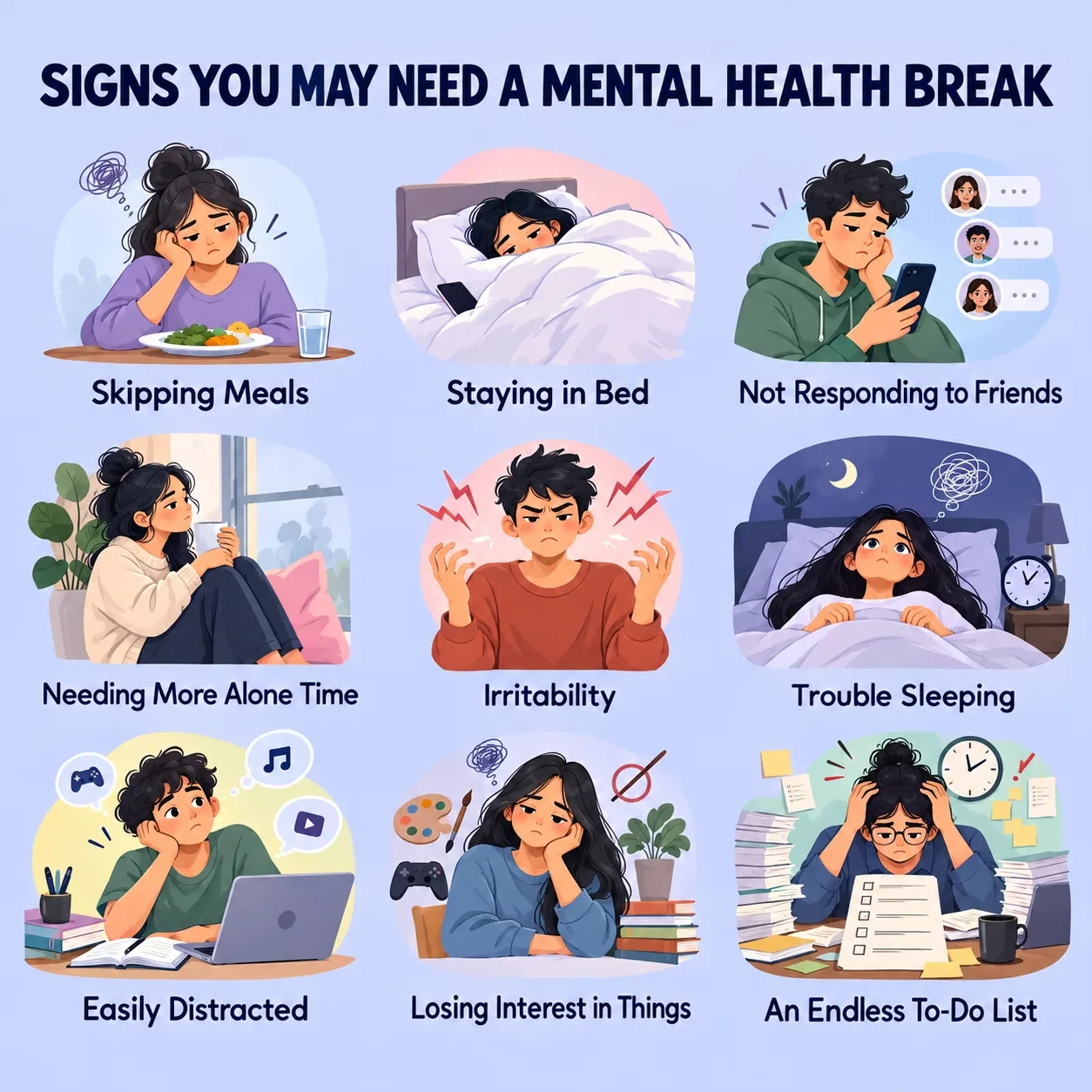
Seven signs that may indicate you need a mental health break.
Why changes in sleep, energy and mood deserve attention.
How stress can sometimes show up through physical symptoms.
Why losing interest in activities and withdrawing from others matters.
When to consider talking to a trusted person or mental health professional.
What you can do if you or someone close to you is struggling.
1. You Sleep, But You Don't Feel Rested
Some people lie awake until 3 am with their thoughts running like a train. Others sleep for nine or ten hours and wake up feeling as though they never slept at all.
We usually blame the phone, a late dinner or that cup of chai after 6 pm. Sometimes, those really are the reasons. But if your sleep has been disturbed for weeks and you cannot identify an obvious cause, pay attention. The body can sometimes show signs of emotional strain before we have found the words to describe what we are feeling.
Persistent sleep changes can be associated with stress, anxiety, depression and several physical health conditions, as explained in the National Institute of Mental Health's guide to depression symptoms. They do not automatically mean that something is wrong with your mental health, but they are worth discussing with a healthcare professional if they continue.
2. Simple Work Feels Like Climbing a Hill
Replying to a WhatsApp message. Calling the electrician. Washing your hair. Paying a bill that is already two days late.
From the outside, people might think you are being lazy or careless. You might even start believing that yourself. But when tasks that never troubled you before suddenly require enormous effort, it is worth looking beyond willpower.
Stress, emotional exhaustion, low mood and poor sleep can affect concentration, motivation and everyday functioning. Even small responsibilities may begin to feel overwhelming.
This does not mean every unproductive day is a mental health concern. Everyone has difficult days. The important thing is to notice a persistent change from your usual routine, particularly when it starts affecting work, relationships or self-care.
3. Your Temper Is Shorter Than Before
Getting irritated by traffic or a minor inconvenience is part of everyday life. What I mean is snapping at your mother over something small, or feeling unexpectedly angry when your toddler asks an innocent question.
At home, we often say, “Mood kharab hai,” and leave it there. Sometimes, though, anger is sitting on top of something else, such as worry, sadness, frustration or exhaustion.
Saying “I'm angry” can feel easier than admitting “I'm not okay.”
Irritability can be associated with stress, anxiety, sleep deprivation and other emotional or physical health concerns. The NHS guide to stress also explains how stress can affect your emotions, body and behavior. If you find yourself reacting more strongly than usual, pause and ask yourself what else might be going on. Have you been sleeping poorly? Are you carrying a worry you have not discussed with anyone? Have you had any time to rest?
Understanding the cause does not excuse hurtful behavior, but it can help you respond more thoughtfully.
4. Your Body Complains, But the Reports Say Everything Is Fine
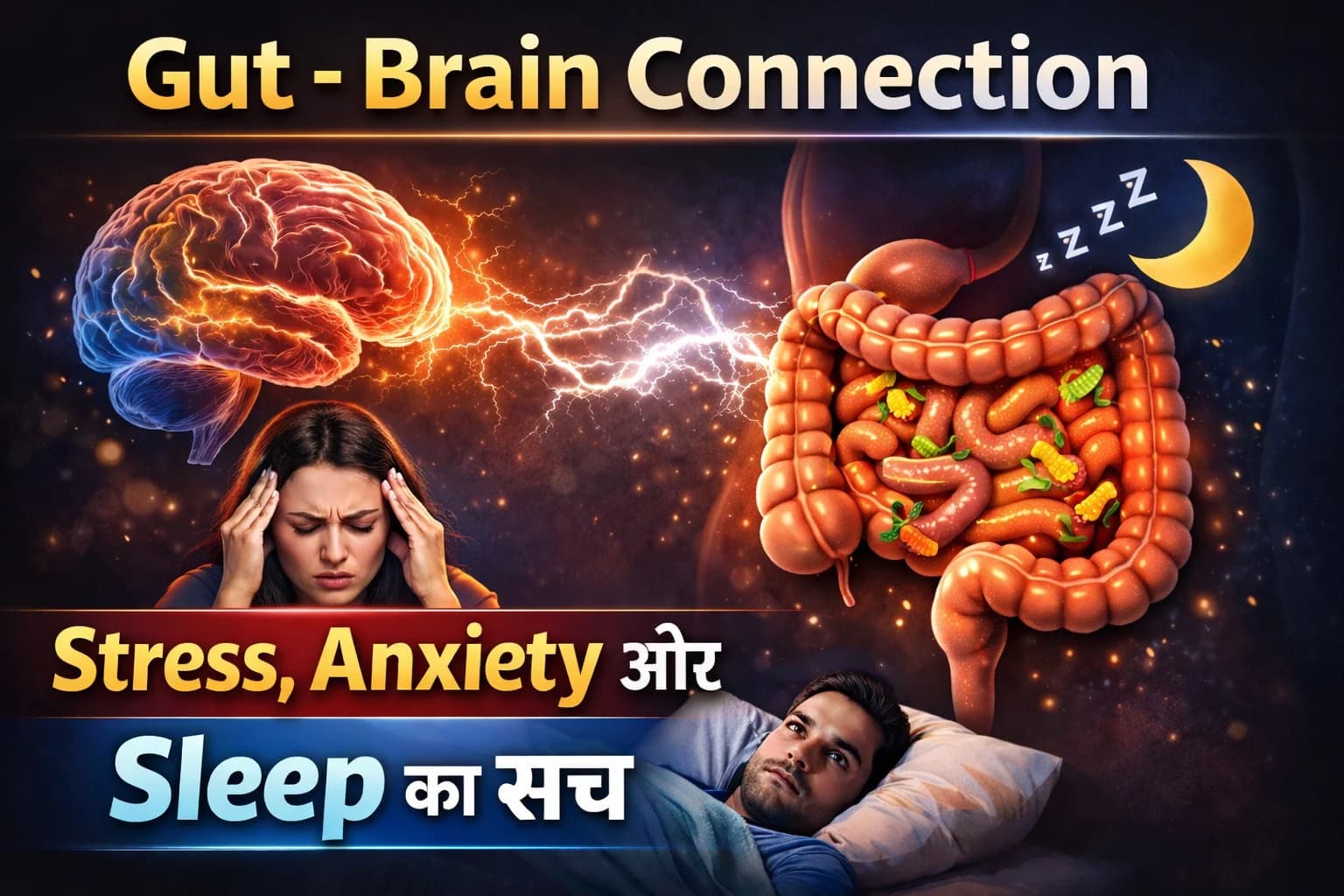
Acidity, headaches, a tight chest, a stiff neck or a stomach that never seems to settle. You get checked, and the initial tests do not reveal an obvious explanation. Yet the discomfort continues.
Please get persistent or new symptoms medically evaluated first. I am not saying that all pain is psychological or that normal test results mean nothing is physically wrong.
However, stress can contribute to physical symptoms, including muscle tension, headaches and digestive discomfort. When symptoms repeatedly appear during stressful periods, it may be helpful to discuss both physical and emotional factors with your healthcare professional.
The goal is not to dismiss what your body is telling you. It is to understand the complete picture. Sometimes, addressing stress alongside appropriate medical care can become an important part of feeling better.
5. You Are Present Everywhere, But Feel Far Away From It All
This is the sign many people miss because, from the outside, everything looks normal.
You reach the office on time. You attend your cousin's wedding. You smile in the group photo. Everyone thinks you are doing great.
Inside, however, it feels as though you are watching your own day on a screen. You keep doing everything, but you feel disconnected from the experience.
Many people carry heavy emotional loads and still manage their daily responsibilities. That does not mean the load is light.
Feeling emotionally distant or disconnected can have different causes, including prolonged stress, exhaustion and low mood. If this feeling keeps returning, becomes distressing or interferes with your relationships and daily life, it deserves attention.
You do not have to wait until you can no longer function before acknowledging that something feels different.
6. Things You Loved Now Feel Dull
Sunday cricket with friends. Cooking for the family. That old Kishore Kumar song. An evening walk.
Now you do these things and feel almost nothing. You are not necessarily sad; you just feel blank.
Losing interest or pleasure in activities you once enjoyed is sometimes called anhedonia. It can occur with depression and other mental health conditions, although it can also happen during periods of exhaustion or significant stress.
Pay attention to your phone habits, too. If you scroll for an hour and feel worse afterwards, it may not have given you the rest you needed. Many of us use screens to distract ourselves from uncomfortable feelings, and the relief may last only a short time.
Try reconnecting with small activities you previously enjoyed, without pressuring yourself to feel happy immediately. If the loss of interest persists, particularly for two weeks or more, consider speaking with a mental health professional.
7. One Habit Has Become Your Only Way to Relax
Maybe it is the fourth cup of chai, scrolling through reels until 2 am, working extra hours, drinking alcohol, eating sweets or online shopping.
There is nothing inherently wrong with enjoying these things. The concern begins when one habit becomes your main or only way of dealing with difficult emotions.
Ask yourself a simple question: “Am I choosing this because I enjoy it, or because I cannot cope with how I feel without it?”
Notice whether the habit is affecting your sleep, finances, relationships or health, and whether you repeatedly find it difficult to cut back.
You do not need to force yourself to stop a habit for three or four days as a test. Instead, observe the pattern and consider healthier ways to manage stress, such as talking to someone, taking a walk, practising relaxation techniques or setting aside time to rest.
If you are relying on alcohol or another substance to cope, professional guidance can help you find safer and more sustainable support.
What I Would Say to a Friend
Don't wait for things to become unbearable.
Many of us have been raised to believe that our struggles count only when they become impossible to hide. So we carry on until we feel we cannot anymore.
We would never deliberately run a phone battery or a scooter into the ground without paying attention to the warning signs. Yet we often treat ourselves that way.
If several of these signs have persisted for more than two weeks, or if they are interfering with your sleep, work, relationships or ability to care for yourself, consider talking to someone you trust or a qualified mental health professional. You do not need to experience all seven signs, and you do not need to wait two weeks if your symptoms are severe or getting worse.
Counselling is not about someone telling you what is wrong with you. It can be a space where you talk through what you have been carrying alone, understand your feelings and explore practical ways to cope.
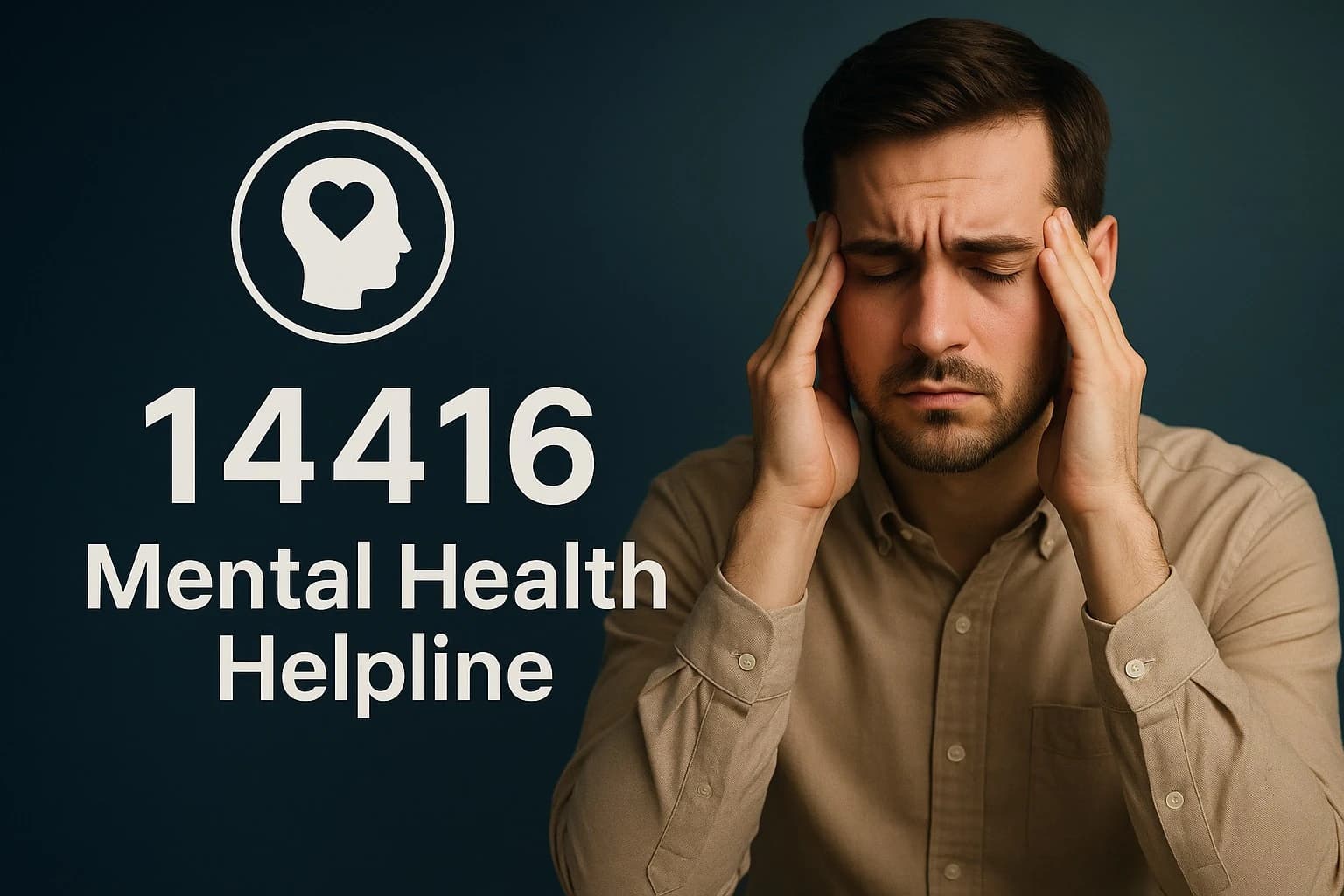
And if you ever feel like hurting yourself or believe you may be in immediate danger, please seek help straight away. In India, you can call Tele-MANAS at 14416 for free mental health support. You can also reach out to someone you trust or go to the nearest emergency department if you are in immediate danger.
Asking for help is not a sign of weakness. Sometimes, it is the first step towards feeling like yourself again.
Frequently Asked Questions (FAQs)
1. How can I tell whether it is stress or something more serious?
Stress often has identifiable triggers and may ease when the situation improves. However, stress can also persist, and mental health conditions can occur alongside stressful life events. If changes in your mood, sleep, concentration or interest in everyday activities continue for two weeks or more, or interfere with daily life, consider speaking with a healthcare professional.
2. Is mental health counselling only for serious problems?
No. People seek counselling for many reasons, including feeling stuck, overwhelmed, worried, low or emotionally exhausted. You do not need a formal diagnosis or a major life event to ask for support.
3. What happens during the first counselling session?
Usually, you talk about what has been happening, how long you have felt this way and how it affects your daily life. The counsellor may ask about your sleep, mood, relationships and current stressors. You can ask questions and share at a pace that feels comfortable for you.
4. What if my family or friends judge me for seeking help?
Some people may misunderstand mental health support because of stigma or a lack of awareness. If you feel comfortable, explain that counselling is a way to look after your emotional well-being, just as you would seek medical advice for a physical concern. You can also choose whom you tell; your personal health decisions deserve respect.
5. How can I help a family member who seems to be struggling?
Start a gentle conversation and listen without immediately judging or trying to fix everything. Ask how they are feeling, give them time to speak and offer practical support, such as spending time together or helping them find professional care. Avoid dismissive comments like “just be positive” or “everyone has problems.”
If they mention self-harm or suicide, take it seriously and help them access immediate professional support.
6. Does needing a mental health break mean I have depression?
No. Feeling tired, irritable or overwhelmed does not automatically mean you have depression. According to the National Institute of Mental Health (NIMH), depression can involve a range of symptoms, and a qualified healthcare professional can help assess persistent concerns.
7. When should I seek professional help?
Consider seeking help when symptoms persist, keep returning, become difficult to manage or affect your daily activities and relationships. Seek help sooner if symptoms are severe, rapidly worsening or causing significant distress. If you are at immediate risk of harming yourself, seek emergency support without delay.
8. Can lifestyle changes alone improve mental well-being?
Regular sleep, physical activity, balanced meals, social connection and relaxation can support mental well-being. However, they may not be enough for everyone. Persistent or severe symptoms may require professional assessment, counselling, medication or a combination of treatments, depending on the individual's needs.
9. Is it normal to want more time alone?
Yes. Everyone needs some time alone to rest and recharge. The concern is when isolation becomes persistent, you withdraw from people you care about or being alone makes it harder to manage everyday life. Pay attention to how the change affects you rather than judging yourself for needing personal space.
10. Is mental health support available for free in India?
Yes. India's Tele-MANAS service provides free mental health support by calling 14416. If you need ongoing care, you can also explore qualified mental health professionals and public healthcare services in your area.
Final Thoughts
Mental health struggles do not always begin with a crisis. Sometimes, they show up as poor sleep, a shorter temper, a growing pile of unfinished tasks or a feeling that the things you once loved no longer matter.
One difficult day does not necessarily mean you need professional help. But when these changes persist, become overwhelming or start affecting your everyday life, do not dismiss them as laziness or a lack of willpower.
Pay attention to the patterns, give yourself permission to rest and reach out when you need support. You do not have to wait until everything falls apart to take your mental health seriously.
Dr Sanjay Sharma (MBBS, MS, DNB, FIJR) is an Orthopaedic specialist with a focus on bone and joint care. He has trained as an Adult Joint Reconstruction Fellow under Dr. Wadhwa, adding specialised experience in joint reconstruction care. At SRPM Healthcare, he provides consultation and guidance for patients with different orthopaedic and joint-related concerns.
ज़रूर पढ़ें